Friday, October 28, 2011

San Francisco! Days 2 and 3, in Photos

SAN FRANCISCO—

Oh hey, it's Sun Yat-sen!

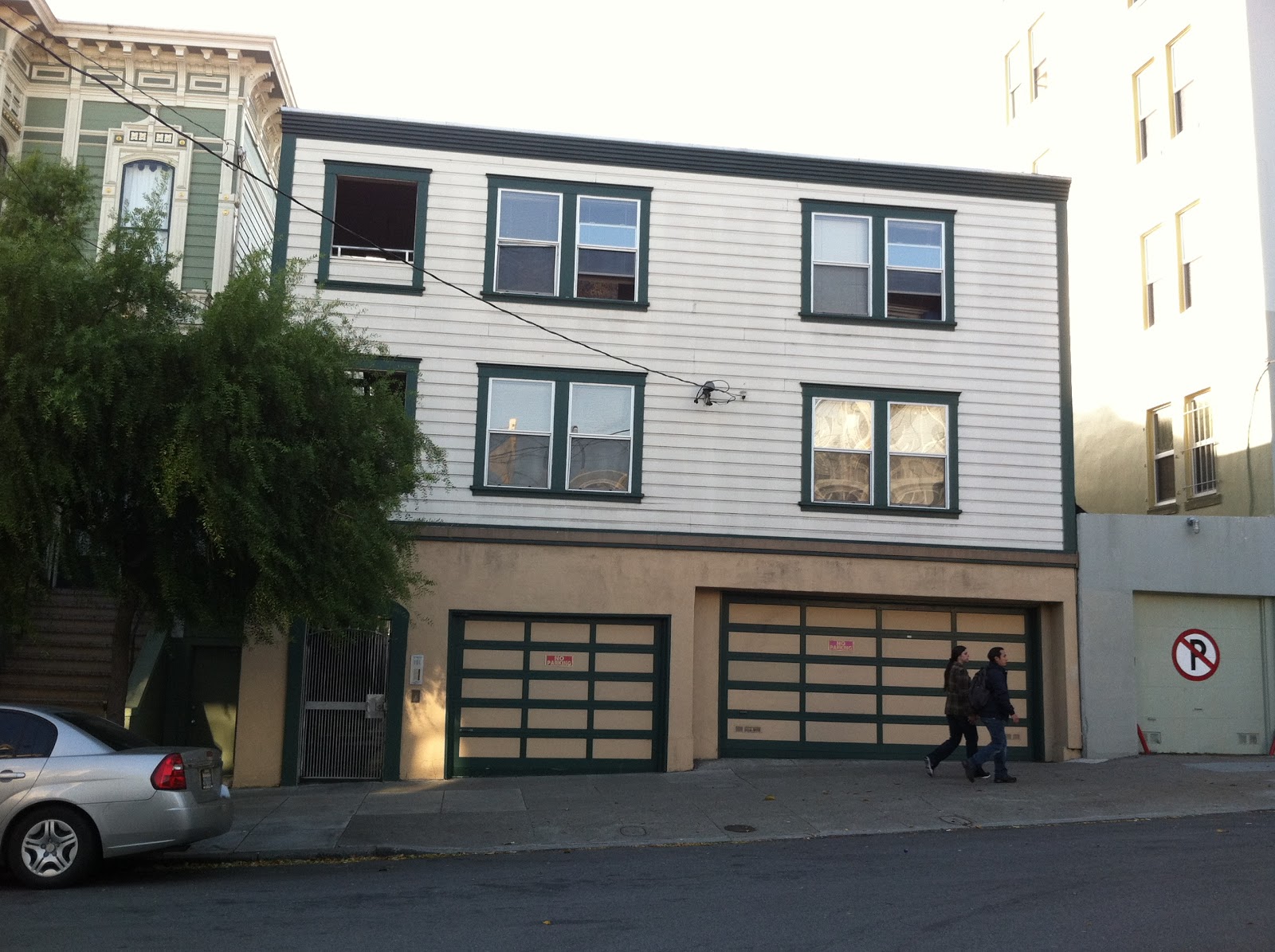
More Vertigo-related sightseeing! Here are the Brockleback Apartments, where Scottie Ferguson begins tailing Madeleine Elster early on in the film.

On Wednesday, I took a Caltrain down to Palo Alto, Calif., to not only meet up (or, more accurately, "tweet up") with friends/acquaintances, but to visit the lovely Stanford Theatre to see Elia Kazan's A Face in the Crowd for the first time. The company was marvelous, the film even more so.

On Jack Kerouac Alley, one of many alleyways in the Chinatown/North Beach part of San Francisco that has a rich history. Once I passed through that alley, I turned left on Columbus Ave. and encountered...

...this famous bookstore, known as the beating heart of the Beat Movement. It is there that I picked up...

Yeah, I couldn't resist picking up a copy of Allen Ginsberg's famously controversial poem Howl in San Francisco? Fitting, right? I actually read the first section of it, and already find its imagery thrillingly urgent, impassioned and devastating (no, I had never read it before). I read it, by the way, at...

...the Caffe Trieste, which, according to the Lonely Planet guidebook I've been consulting, is where Francis Ford Coppola drafted his screenplay for The Godfather.

This is the Coit Tower, located in Telegraph Hill, and named after its benefactor, Lille Hitchcock Coit (1843-1929), who was apparently a female firefighter back in the day. The top of this building is where I captured...

...this view of the Bay Area.

Fitting to find a memorial erected to Guglielmo Marconi, the inventor of radio, in Telegraph Hill.

This shot was taken in Russian Hill, which took yet another hike to climb. (All these hills in San Francisco sure giving me some exercise even on vacation!) I believe that's Alcatraz in the distance, right? I was considering visiting, but may not have the time. We shall see.

The Dragon Gate—which I guess I considered the entrance into Chinatown. (Taiwan, also according to Lonely Planet, was donated this structure in 1970.)

Covering all the bases: state, country and city, from left to right.

Wednesday, October 26, 2011

Greetings from San Francisco!

SAN FRANCISCO—I suspect posting will be sparse in the coming week as I try to relax here in the Bay Area, but I'll try to keep you all up to date a bit on my adventures here on this blog through photo-driven posts like this one. (And if you can't get enough of these posts...well, there's my Twitter feed, of course.)

Here is a taste of the places I visited yesterday, my first full day in San Francisco:

Clarion Alley, one of many alleys in the Mission district housing all sorts of amazing pieces of street art

The Mission Dolores chapel. Vertigo fans—of which I am most certainly one—might find this a familiar sight...

Is Carlotta Valdes's grave anywhere here? (Another Vertigo reference, for those who didn't get that; this is the cemetery in the Mission Dolores.)

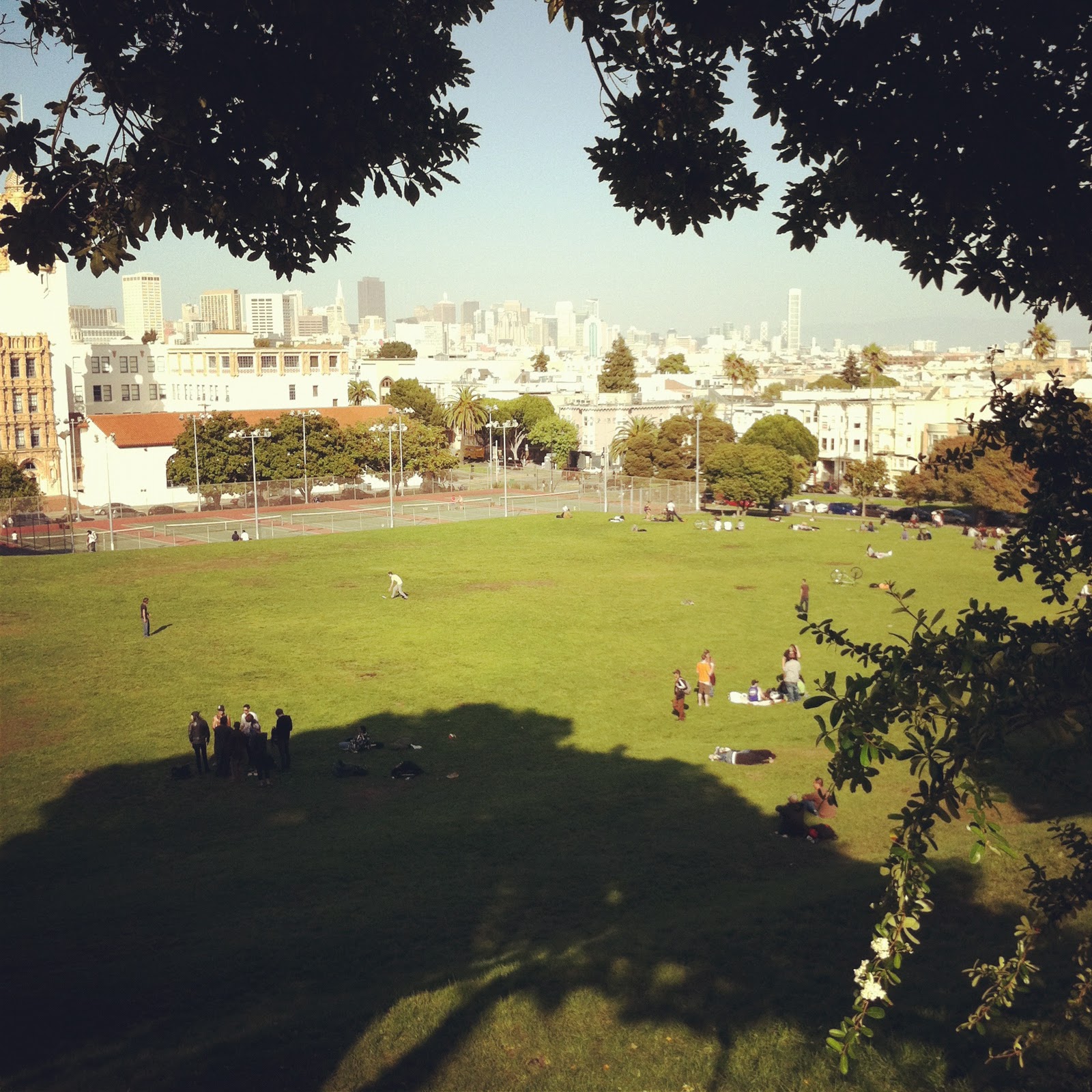
The view of San Francisco from Dolores Park

The rainbow flag in the Castro. This is for all my gay friends.

This is 237 Steiner St. in the Lower Haight district. Fans of the Shut Up Little Man! audio recordings—as well as the recent documentary Shut Up Little Man! An Audio Misadventure—would understand the significance of this address.

Monday, October 24, 2011

Video for the Day: Razor the (Super Hyper) Dog

BROOKLYN, N.Y.—There's one more thing I want to post here on my blog before my Bay Area vacation begins for real.

It's this:


Those of you who follow me on Twitter and Facebook already know a little bit about Razor, the Siberian husky that resides in the Brooklyn apartment in which I and three others live. For the rest of you, though...well, here he is, in a particularly excitable mood one evening last week after I came home from work. (I don't consider Razor my dog, by the way; one of my roommates bought him last year and generally takes care of him. But, after some initial resistance, I've come to embrace the big ol' bugger...especially when he acts like that.)

Oh, and Razor was recently featured on Gothamist! See here!

All right, back to packing for San Francisco now.

Artistic Consumption Log, Oct. 17, 2011 - Oct. 23, 2011: Pre-San Francisco Edition

BROOKLYN, N.Y.—In a few hours, I will be heading to John F. Kennedy International Airport in order to fly out to San Francisco to visit the city for the first time ever.

Why am I going? Well...in this case, just because. No film festival, no film-review or job-related obligations. This trip is just for me—to relax, recharge, reflect. I don't think I've really had that kind of trip in a long while. (And unlike my last venture to the West Coast, last year when I visited Los Angeles, I'm going this one alone. We'll see how that goes.)

So I'm not sure how much art I'll be consuming in the coming week. The Bay Area has a fairly rich alternative-film scene which I intend to explore to a certain extent, so some film-watching will probably be on the menu. Other than that...maybe a concert at Davies Symphony Hall with the San Francisco Symphony Orchestra? 

Until then...here's my latest artistic consumption log for the past week. I didn't come across anything extraordinarily overwhelming on the art front—though the Dardenne Brothers' latest film, The Kid With a Bike, came close.

The Kid With a Bike (2011)

Films

The Skin I Live In (2011, Pedro Almodóvar), seen at AMC Empire 25 in New York
I remember walking out of Pedro Almodóvar's latest film feeling underwhelmed. Days later, upon reflection, I feel a bit more affection for the film than I did immediately afterward. What I remember most from the film is its sometimes exhilarating sense of narrative freedom, with Almodóvar boldly taking his story into unapologetically perverse territory. (I'll give you only one hint as to where this film heads: The Skin I Live In features music by Throbbing Gristle, the British avant-garde band led by Genesis P-Orridge. If you know who Genesis P-Orridge is...) This might have been a truly great film if Almodóvar's characters had been sketched with nearly as much care as he puts into his plotting and his imagery. Still, at its best, The Skin I Live In carries some of the aggressively transgressive charge of his early, pre-All About My Mother work. And hey, at least it isn't boring—which is more than could be said for his last film, Broken Embraces, the rare instance where his taste for melodrama felt, for the most part, fatally rote.

★ Contagion (2011, Steven Soderbergh), seen at Regal Union Square Stadium 14 in New York
The common knock against Steven Soderbergh as an auteur, it seems, is that he doesn't have much of a signature, that he's difficult to pin down, that his films sometimes tend to be chilly theoretical experiments. There is perhaps truth in all of that, and Contagion—a biological disaster film that's shot more for clinical realism than freaky sensationalism—won't do much to lessen those impressions. Maybe the fact that I ended up enjoying the film anyway has to do with the fact that I expected all this going in and thus found Soderbergh's detachment actually somewhat comforting. There are themes to be found in this film if you care to look deep enough, I'm sure—half-formed ideas about self-interest vs. selflessness, old-school journalism vs. new media, and so on; I suspect, though, that Soderbergh mostly focused on telling the story as efficiently as possible and leaving Scott Z. Burns's script to take care of itself. Contagion works as a fairly engrossing thriller in which moments of genuine emotion are allowed to pop up amidst the deliberately drab technological spectacle.

DOC NYC, all films seen at IFC Center in New York
Undefeated (2011, Daniel Lindsay & T.J. Martin)
★ Kumaré (2011, Vikram Gandhi)
I volunteered to review these two films in the upcoming DOC NYC documentary film festival for The House Next Door, so I'll let that piece speak for itself, when I get around to writing it up.

★ The Kid With a Bike (2011, Jean-Pierre & Luc Dardenne), seen at Brooklyn Academy of Music in Brooklyn, N.Y.
More film-festival catch-up! Here, the Dardenne Brothers come up with an affecting coming-of-age fable in which a troubled but headstrong young boy named Cyril (Thomas Doret, amazing) tries to adjust to life without his deadbeat dad (Jérémie Renier, natch after the role he played in L'Enfant) after he leaves him. With their last film, Lorna's Silence (2008), you could sense the Dardennes trying to at least take some baby steps away from their usual emphasis on naturalism; in The Kid With a Bike, they go even further by introducing fairy-tale elements within their realistic style. At least, that's the only way I can explain, say, the near-angelic nature of Cécile de France's surrogate-mother character (we barely get an idea about why this stranger suddenly takes an interest in Cyril; she just kinda does) or the melancholy snatches of the slow movement of Beethoven's Fifth Piano Concerto that the Dardennes include on the soundtrack (placed at strategic moments, as if marking off important stages in Cyril's emotional arc).

That is not to say that the Dardennes are going for a more simplistic version of their previous morality plays; moral ambiguity still plays a major part in their worldview, except this time around, it's filtered through the point-of-view of Cyril, a kid who is only now getting his first, brutal taste of the adult world. But the Dardennes, as ever, somehow manage to adopt a main character's viewpoint without ever fully inhabiting it—and some of its most memorable moments come from the way they look at a particular situation from various perspectives without losing the essential sympathy they have for Cyril.

Good stuff, all in all...though I wonder if, with their next film, the Dardennes will maybe just drop the pretense of realism altogether and do something completely and utterly different from the style they're known for. No more of these baby steps, guys! Just do it!

Music

★ Watch the Throne (2011, Jay-Z & Kanye West)
I finally got around to hearing this much-hyped collaboration between two recent hip-hop giants, and it turns out Watch the Throne lives up to its name in one respect: some of these cuts positively abound in regal, majestic, deliberately overblown sounds and production. And, of course, there's the usual quota of braggadocio you have to put up with from these two. But such ego-tripping coexists fascinatingly with moments of brutal honesty, most notably in Jay-Z's case (listen to the second half of "New Day," for instance). Watch the Throne ends where West's My Beautiful Dark Twisted Fantasy began, and it's far less consistent—but it's generally enjoyable overall.

Debut (1993, Björk)
Thanks to the release of Björk's latest work, the multi-platform Biophilia, I've finally decided to dive into the much-celebrated music of this Icelandic iconoclast. (And yes, this means that I haven't yet watched Lars von Trier's Dancer in the Dark, in which she played the lead role and wrote the songs.) As usual, I started from the beginning: her first solo album, cleverly titled Debut. It's an interesting if somewhat uneven effort; I'm guessing later albums will be even stranger and more experimental than this one, which is, more often than not, tied down to fairly same-y dance beats.

Dance

★ Radio & Juliet (2009, Edward Clug), performed at NYU Skirball Center in New York
This abstract modern take on the Shakespeare classic, set to music by Radiohead and performed by the Slovenian dance troupe Ballet Maribor, has apparently been touring the world for a couple of years now. It finally made it to New York over the weekend, and if you don't mind the hour-long ballet's clinical feel, it's a fascinating trip. Instead of two warring clans, Radio & Juliet basically features one female dancer and six male ones, one of whom takes a romantic interest in the woman...or do all of them take an interest? At a couple points in the ballet, "Romeo" and "Juliet" dance with each other...but then one "Romeo" is replaced with another, then that other is replaced yet another...you get the idea. What does that signify? It certainly doesn't recall anything in Shakespeare's text. But then, a lot of elements in this ballet don't recall anything in Shakespeare's text; it borrows certain elements, but stakes out an identity of its own. What matters, in the end, is that Radio & Juliet works on its own alien terms; even better, it manages to bring out the creepier aspects of Radiohead's music—most of it from Kid A (2000), Amnesiac (2001) and Hail to the Thief (2003), their more experimental albums—that honestly I don't think I had really, truly felt while listening to their music in isolation.

Wednesday, October 19, 2011

My Day Occupying Wall Street

NEW YORK—On Saturday, I finally got a chance to go to lower Manhattan and visit Zuccotti Park, site of the very first Occupy Wall Street demonstration in what has become a world-wide movement.

Don't worry, Wall Street Journal, I didn't go there to either support or condemn the protesters! I was just there to observe and discuss. And observe I did, as this video attests:


As you can see, Zuccotti Park has become something of a virtual community, complete with food bank and library. It's actually rather impressive; I never thought I would see Rutgers University's annual Tent State University movement spread into the outside world in this way!

Whatever you think of the movement's ideas and beliefs, though, I still find it heartening to see regular people (the so-called "99%," as per this movement's characterization of middle-to-lower-class folk) being this passionate and engaged in American political discourse. Who says us young folks are all self-absorbed and apathetic???

Here are some more photos I took from Saturday's tour through Zuccotti Park:


Later that day, some of the demonstrators took the cause up to Times Square for a more conventional kind of rally. I checked out the scene there, too:


As you can see and hear, these demonstrators have hit upon a fairly inventive way of spreading their message across a wide area so everyone can hear: "human microphones" in which everyone in the crowd passes the words of a speaker along, round-robin style. Maybe this has been done in rallies before, but it was the first time I experienced it in person.

And even later, the Times Square demonstrators gathered in Washington Square Park to continue the rally. I checked this out briefly, but didn't stick around too long; all I got from this nightcap was this photo...


...which reminded me somewhat of that famous Eugène Delacroix painting "Liberty Leading the People":


Thus ended my day occupying Wall Street.

Tuesday, October 18, 2011

At Toronto's Yonge-Dundas Square on a Sunday Morning

NEW YORK—Amidst all the New York Film Festival coverage I've done in the past month or so, I wasn't able to put up this video I took of Yonge-Dundas Square while I was at the Toronto International Film Festival in September...until today.


It's not much: just a slow 360° shot (a signature of mine as an amateur videographer, if I was to exalt myself to the level of amateur auteur or something pretentious like that). But this footage was taken at around 8:30 in the morning...and unlike New York's Times Square, apparently Yonge-Dundas Square that early in the morning looks and feels like a dead zone of sorts. Not a whole lot of people, few cars on the roads—frankly, it almost looked as if the apocalypse had already hit, that's how barren it looked!

But hey, what a sunny, beautiful apocalypse, am I right?

Monday, October 17, 2011

Artistic Consumption Log, Oct. 10, 2011 - Oct. 16, 2011

BROOKLYN, N.Y.—Wait...I actually have time to annotate my latest artistic consumption log? Amazing!

Margaret (2011)

Films

New York Film Festival 2011 (all films screened at Walter Reade Theater unless otherwise noted):
Corman's World: Exploits of a Hollywood Rebel (2011, Alex Stapleton)
★ The Descendants (2011, Alexander Payne)
I wrote about the enjoyable if skin-deep Roger Corman documentary Corman's World in my last House Next Door New York Film Festival review here.

The festival ended last night with Alexander Payne's latest film as its closing-night selection...and it turned out to be a pretty good selection. Those who are worried that Payne indulges in his usual penchant for caricature and condescension can rest assured that, in The Descendants, he largely abandons it here...and even when the film threatens to slip into such tendencies with certain supporting characters (Alexandra's dim boyfriend Sid, the philandering real-estate agent), Payne manages to include scenes or moments that humanize even those relatively minor players. What emerges is an often moving portrait of a workaholic father (George Clooney) living in Hawaii who, when faced with the prospect of having to shut off the life-support system of his comatose wife, is forced to not only grow as a father, but also face familial skeletons in the closet that he had long suppressed. Even more so than his last two features, About Schmidt (2002) and Sideways (2004), The Descendants proves that Payne is capable of something approaching genuine human drama, not just the wicked satire of Citizen Ruth (1996) and Election (1999).

And now, thanks to the Toronto and New York film festivals, I think I'm all "film-festivalled" out for the time being!

★ Margaret (2011, Kenneth Lonergan), screened at Landmark Sunshine Cinema in New York
I agreed to write up something about this film for the film- and music-review site In Review Online, so I'll have a chance to flesh out my thoughts on this film later.

For now...well, here is the last line of legendary film critic Pauline Kael's review of Satyajit Ray's Distant Thunder back in 1975: "I don't know when I've been so moved by a picture that I knew was riddled with flaws. It must be that [Satyajit] Ray's vision comes out of so much hurt and guilt and love that the feeling pours over all the cracks in Distant Thunder and seals them up." That's exactly what I would say about Margaret, Kenneth Lonergan's wildly ambitious follow-up to his 2000 chamber drama You Can Count On Me. It's far from perfect—some of its editing rhythms are oddly disjointed, for one thing, especially in its last hour—but it's so intelligent, impassioned and deeply felt in its exploration of one adolescent's response to death and guilt that its flaws, such as they are, are mere piddles in what it successfully accomplishes. It is indeed a staggering achievement, in many ways—and so it's a shame that the film (which was shot way back in 2005 and has a copyright of 2008 on it) only got a token two-week run here in New York as a result of a troubled production history and pending lawsuits over the film's ownership. It deserved far better.

★ Dead Alive (1992, Peter Jackson), screened at 92YTribeca in New York
★ Re-Animator (1985, Stuart Gordon), screened at 92YTribeca in New York
92YTribeca screened these two splatter classics in a double bill on Friday night, so I seized upon the opportunity to fill in two major blind spots in my horror knowledge. Horror? That's just the name of the genre; these two films are more accurately described as gruesome black comedies. These aren't ironic parodies, though; the last thing you could call either Dead Alive or Re-Animator is smug or contemptuous of genre. Dead Alive, for all its extreme bloodletting (this may well be the bloodiest film I've ever seen), works quite beautifully, actually, as a sincere coming-of-age tale about a mama's boy (played by Timothy Balme) who learns to break away from his overcontrolling mother (hey, I can relate!); in this case, though, his maturation requires him to eventually wield a lawnmower and mow down scores of zombies in a masterfully orchestrated half-hour setpiece of blood, guts and mayhem. Jackson's film is full of such witty, bravura blood-soaked setpieces, all shot with a proliferation of exaggerated wide-angle lenses that lend the whole film a comic-book air that takes the brutality out of the grotesque violence.

Dead Alive is a lot of fun, at least for those with strong stomachs (and it's also a welcome reminder of the kind of filmmaker Jackson was before he became all respectable with the Lord of the Rings epics). But Re-Animator—an adaptation of an H.P. Lovecraft short story—is on a whole other plane of greatness. The best way I can think to describe this, for those who haven't seen this film yet, is that it is a serious comedy about the fear of death, its outré humor borne out of a genuinely serious consideration of the ways people deal with mortality—especially the possibility of avoiding it, as Dr. Herbert West (Jeffrey Combs) offers with the shiny green serum he develops. What if you were given a second chance at life? What would you do with it? The answers for some of the re-animated characters here are sometimes outrageously perverse (I sure as heck haven't seen a film in which a live severed head goes down on a naked blonde, have you?), but its morbid undercurrents lend the film a coherence that Dead Alive barely manages (not a knock on the Jackson film, mind you). I wouldn't call Re-Animator disturbing, exactly...but in its own gleefully tasteless way, it's thought-provoking.

One minor quibble with Re-Animator: Are people generally okay with how blatantly derivative of Bernard Herrmann parts of Richard Band's score are? Like, his opening-credits music is pretty obviously a rip-off of Herrmann's Psycho opening; Band doesn't even try to hide it.

Music

★ Scary Monsters (1980, David Bowie)
★ Let's Dance (1983, David Bowie)
As some of you can tell in my previous barebones artistic consumption logs, I've been slowly introducing myself to a good majority of David Bowie's recorded output, at least up to the early 1980s (I hear that it's basically all downhill from Let's Dance onward, so I'm inclined to move on to some other artist at this point...but I'm willing to hear arguments to the contrary). For the most part, it's been an immensely enjoyable and often exhilarating experience, with each album a true musical adventure, for well and ill. These two latest "adventures" aren't quite on the exalted plane of my two personal favorite Bowie albums, Station to Station (1976) and Low (1977), but they all have their moments of brilliance. In fact, "Ashes to Ashes," from Scary Monsters, may well be my favorite Bowie song ever, if only because I find it a rather disturbing song underneath its whimsical oddball surface, especially towards the end, with the arrangement laying on a foreboding bass synthesizer as Bowie's voice, enhanced with a halo-like effect, repeatedly intones, "My mother said to get things done / You'd better not mess with Major Tom." Sounds like an ominous children's nursery rhyme, that. Weird and wonderful: That's Bowie in a nutshell. (Maybe now would be a good time to rewatch The Man Who Fell to Earth, which I found generally boring when I saw it at Film Forum earlier his year...)

Wednesday, October 12, 2011

New York Film Festival 2011, "Confused Young Girls" Edition

BROOKLYN, N.Y.—


My latest New York Film Festival dispatch couples together two films I saw at Toronto International Film Festival: Sean Durkin's tense debut feature Martha Marcy May Marlene and Mia Hansen-Løve's warm and wise third film Goodbye First Love. At first, the only reason I decided to bunch these two together was because I had previously seen them in Toronto; as I started writing this piece, however, I realized that there are some other similarities connecting them—most notably, the fact that both films feature young female heroines under duress, whether extreme in the case of the former or universal in the case of the latter. Similar or not, both are very much worth seeing.

(Both of them have theatrical distribution, by the way, so you won't have to pay, like, $24 to see them in upcoming public screenings. But, hey, far be it from me to discourage you from giving money over to the Film Society of Lincoln Center and their New York Film Festival! Without them, I wouldn't be keeping busy right now and keeping my mind off my stagnant professional career and all that!)

Tuesday, October 11, 2011

New York Film Festival 2011: Catching Up on Some Links

BROOKLYN, N.Y.—


I've fallen behind on linking you all to my recent contributions to The House Next Door's New York Film Festival coverage, so...if you haven't seen them already thanks to my links to them on my Twitter and Facebook pages, here are my reviews of Two Years at Sea, the hypnotic first feature film of British avant-garde filmmaker Ben Rivers; and a dual review of German director Ulrich Köhler's so-so anti-imperialist screed Sleeping Sickness and Turkish director Nuri Bilge Ceylan's slow but rewarding police procedural Once Upon a Time in Anatolia.

Enjoy! I have three more films to review, and then I'll be done with this year's New York Film Festival. Home stretch, baby!

Monday, October 10, 2011

Artistic Consumption Log, Oct. 3, 2011-Oct. 9, 2011

BROOKLYN, N.Y.—It's the home stretch, folks: the last week of the New York Film Festival. I have three more reviews to write up this week, and then it's all over and done with...and maybe then I can go back to more extensive artistic consumption logs!

For now, though, you will all have to make do with another barebones one.

One thing I'd like to explain, though, as a preface. This weekend was Views from the Avant-Garde weekend at NYFF—a four-day showcase of some of the latest and brightest in experimental film. So a lot of the films I saw at the festival this past week were a part of this sidebar—all the Ben Rivers and Ernie Gehr shorts, Jerome Hiler's Words of Mercury, Nathaniel Dorsky's The Return and James Benning's Twenty Cigarettes. With the exception of the last title (not a bad film, by any means, just far less revelatory than Benning's last film, Ruhr), most of the rest was pretty mind-blowing; as I soaked up these images, I felt my conception of cinema literally expand in my head. (I'm almost thankful I didn't see a lot more of this kind of filmmaking this weekend than I did; my mind might have felt like it was about to explode!)

Oh yeah, and Melancholia is damn good—better than Lars von Trier's last film, Antichrist, for my money. It's available to view on demand, but it's certainly worth seeing on a big screen, if you can.

The Return (2011)

Films

New York Film Festival 2011 (all films screened at Walter Reade Theater in New York unless otherwise noted):
★ This Is Not a Film (2010, Jafar Panahi & Mojtaba Mirtahmasb)
★ Melancholia (2011, Lars von Trier), screened at Alice Tully Hall in New York
★ Sack Barrow (2011, Ben Rivers), screened at Francesca Beale Theater in New York
★ Slow Action (2010, Ben Rivers), screened at Francesca Beale Theater in New York
★ Crystal Palace (2011, Ernie Gehr)
★ Thank You for Visiting (2010, Ernie Gehr)
Mist (2010, Ernie Gehr)
★ ABRACADABRA (2009, Ernie Gehr)
★ Words of Mercury (2011, Jerome Hiler), screened at Francesca Beale Theater in New York
★ The Return (2011, Nathaniel Dorsky), screened at Francesca Beale Theater in New York
My Week With Marilyn (2011, Simon Curtis)
Twenty Cigarettes (2011, James Benning)

★ Weekend (1967, Jean-Luc Godard), screened at Film Forum in New York [second viewing]

Music

★ "Heroes" (1977, David Bowie)
★ Lodger (1979, David Bowie)

Theater

Nightlands (2011, Sylvan Oswald), performed at HERE Arts Center in New York

Wednesday, October 05, 2011

New York Film Festival 2011: The Student and This is Not a Film

BROOKLYN, N.Y.—


I didn't have much of an idea going into Santiago Mitre's The Student what I was in for; heck, I didn't even have much of an idea of what other critics were saying about the film, if anything. Turns out, this is a reasonably engaging political drama from Argentina that manages to yield some dividends with its college-as-microcosm-of-Argentinian-politics conceit. It's a solid piece of work overall—as I try to suggest in my latest House Next Door New York Film Festival dispatch. (It screens on Saturday, Oct. 8, at 12:30 p.m. and Wednesday, Oct. 12, at 6 p.m., if any of you in the tri-state area are interested in checking it out.)


Also, I'd be remiss if I didn't mention this in passing: Yesterday, I saw what I would probably consider my favorite film of the festival up to this point: This Is Not a Film (2010), the recent collaboration between Jafar Panahi and Mojtaba Mirtahmasb done while Panahi was still under house arrest and awaiting what would eventually be his sentence to six years in prison and 20 years banned from filmmaking. It's a documentary that doubles as a richly self-reflexive piece of cinema—but, like fellow Iranian filmmaker Abbas Kiarostami's great Close-Up (1990), it balances intellectual concerns with real, heartfelt emotion. The result is a heartening middle finger to a repressive regime and a deeply moving personal testament of an artist maintaining his humanistic stance even in the midst of imminent imprisonment that threatens to completely silence his voice. (Even the story of how the film was smuggled out of Iran is inspiring, being that it was smuggled in a USB drive hidden in a cake.)

I wasn't assigned this film to review, so consider that my (too short) review. Even shorter version: You must see this! (It screens at the New York Film Festival on Thursday, Oct. 13 at 6 p.m.)

Tuesday, October 04, 2011

NYFFing and TIFFing It Up!

BROOKLYN, N.Y.—


Over the weekend, my New York Film Festival review of Le Havre went up at The House Next Door. Le Havre is the latest film from Finnish filmmaker Aki Kaurismäki—yet another well-regarded world-cinema auteur whose work I wasn't really familiar with before undertaking the assignment to review it. So I decided to make my inexperience with Kaurismäki's work a part of my review. I have the freedom to do that kind of thing at The House! The movie's not bad, either.

Oh, and here's a blast from the (recent) past: I contributed a few capsule reviews for In Review Online's recently published wrap-up of this year's Toronto International Film Festival. Surprisingly, I had a pretty easy time of sticking to 90-100 words for each of my contributions; I totally expected to struggle to condense my always complex opinions on films to such a short amount of space, but they just seemed to flow out of me once I got into a groove.

Anyway, enjoy my latest output! I need to keep up this writing thing, seriously.

Monday, October 03, 2011

Artistic Consumption Log, Sept. 26, 2011-Oct. 2, 2011

NEW YORK—

Low (1977)

Films

New York Film Festival 2011 (all films screened at Walter Reade Theater in New York unless otherwise noted):
★ Two Years at Sea (2011, Ben Rivers)
★ The Student (2011, Santiago Mitre)
Sleeping Sickness (2011, Ulrich Köhler)
★ Once Upon a Time in Anatolia (2011, Nuri Bilge Ceylan)
★ Ben-Hur (1959, William Wyler), screened at Alice Tully Hall in New York
★ A Separation (2011, Asghar Farhadi), screened at Alice Tully Hall in New York

★ 10 (1979, Blake Edwards), screened at Brooklyn Academy of Music in Brooklyn, N.Y.

★ The Last Picture Show (1971, Peter Bogdanovich), screened at Film Forum in New York

Music

點解 (1987, 劉美君)

★ Low (1977, David Bowie)

Friday, September 30, 2011

New York Film Festival 2011: The Loneliest Planet and Dreileben

NEW YORK—


Tonight the New York Film Festival officially gets underway with lavish opening-night gala screenings of Roman Polanski's latest film, Carnage.

I won't be there, being that, even for members, getting into gala screenings at this festival can cost someone up to $50—hardly a cheap proposition! And alas, I had to miss the press screening for it, because this year I'm not taking any days off from work for them; instead, I find myself having to go to morning screenings and arrive to work just a bit late (though don't worry, my boss has so far been totally okay with this, provided I give her advance notice and all).


I have been able to see some other good films playing at the festival so far...and my reviews for two of them are finally up at The House Next Door—those of Julia Loktev's latest film The Loneliest Planet; and Dreileben, a trilogy of made-for-TV German films featuring three different directors offering different perspectives on the same crime. The links for both reviews are embedded on the individual film titles.

So go on, read 'em and then comment, why don'tcha?

There is plenty more to come, of course. "Watch this space," as they say here on the Web...

Tuesday, September 27, 2011

From One Filmmaker to Another: Abbas Kiarostami's Five Dedicated to Ozu (2003)

NEW YORK—


Amidst my attempt to balance New York Film Festival coverage for The House Next Door with my day job and even the occasional night out at the movies, this was published recently: a piece I wrote about Abbas Kiarostami's experimental 2003 film Five Dedicated to Ozu as my contribution to the site In Review Online's near-complete retrospective of the legendary Iranian filmmaker. Enjoy, and then by all means, go check out the other articles in this exhaustive series!

Hopefully my New York Film Festival reviews—or, rather, the two I've completed so far—will be going up soon (the festival starts on Friday).

Monday, September 26, 2011

Artistic Consumption Log, Sept. 19, 2011-Sept. 25, 2011

BROOKLYN, N.Y.—Another week, another barebones artistic consumption log.

My workload for The House Next Door's New York Film Festival coverage was a bit larger than I had expected (I requested a lot of titles—basically, just about every film screening I thought I could make—and got a lot more than I anticipated), and already I feel like I'm on the verge of falling behind! So once again, I didn't have much time to annotate this week's log as I usually like to do, prioritizing work on a review over commenting on stuff I saw over the past week. But hey, I'll end up writing extensively about a good portion of it anyway, and it'll be published on a forum for a wider audience to see—so you all have that to look forward to. (Of course, I'll try to post links to those reviews on this blog as they go up.)

For now, though, I just want to say right here: I know Sleep No More—the fantastically inventive and immersive theater piece/art installation/adaptation of William Shakespeare's Macbeth being staged on a few floors of the McKittrick Hotel in Chelsea here in New York—is super expensive, ranging from $75-$95 depending on when you go. But you all owe it to yourselves to go, if you're in the area. It's a truly amazing, one-of-a-kind experience, and I think the sheer novelty of it is enough to justify the extra expense. Read this New York Times review to get an idea of what you're in for.

The Bad and the Beautiful (1952)

Films

New York Film Festival 2011 (all films screened at Walter Reade Theater unless otherwise noted):
★ The Loneliest Planet (2011, Julia Loktev)
★ Le Havre (2011, Aki Kaurismäki)

Dreileben trilogy:
★ Beats Being Dead (2011, Christian Petzold)
Don't Follow Me Around (2011, Dominik Graf)
One Minute of Darkness (2011, Christoph Hochhäusler)

Andrew Bird: Fever Year (2011, Xan Aranda)


Drive (2011, Nicolas Winding Refn), screened at Regal Union Square Stadium 14 in New York

★ The Bad and the Beautiful (1952, Vincente Minnelli), screened at Brooklyn Academy of Music in Brooklyn, N.Y.

Music

★ 雪在燒 (1987, 黃鶯鶯) [umpteenth listen]

★ Kronos Quartet: Awakening: A Musical Meditation on the Anniversary of 9/11, performed at BAM Harvey Theater in Brooklyn, N.Y.

Theater

★ Sleep No More (2011, Punchdrunk), experienced at The McKittrick Hotel in New York

Monday, September 19, 2011

Artistic Consumption Log, Sept. 12, 2011-Sept. 18, 2011

BROOKLYN, N.Y.—Alas, I ended up not being able to find a whole lot of time to do much beyond coming up with little tweet reviews of all the films I saw in Toronto during the recently finished Toronto International Film Festival. I will eventually write something about at least some of the films I saw at the festival; hell, I may even write about the experience itself, which was overall pretty awesome.

For now, though, this latest log will once again consist only of titles...especially now that I have the upcoming New York Film Festival to suck more time away from writing about TIFF 2011. There are a lot of titles, though, for what it's worth.

Films

Toronto International Film Festival 2011:
★ Albert Nobbs (2011, Rodrigo Garcia), screened at Winter Garden Theatre
★ You're Next (2011, Adam Wingard), screened at AMC Yonge & Dundas 24
★ Faust (2010, Alexander Sokurov), screened at TIFF Bell Lightbox
Shame (2011, Steve McQueen), screened at TIFF Bell Lightbox
Damsels in Distress (2011, Whit Stillman), screened at Elgin Theatre
The Moth Diaries (2010, Mary Harron), screened at Scotiabank Theatre
★ Alps (2011, Yorgos Lanthimos), screened at TIFF Bell Lightbox
Sleeping Beauty (2011, Julia Leigh), screened at TIFF Bell Lightbox
Lovely Molly (2011, Eduardo Sánchez), screened at Ryerson Theatre
★ Invasión (1969, Hugo Santiago), screened at TIFF Bell Lightbox
★ Love and Bruises (2011, Lou Ye), screened at TIFF Bell Lightbox
★ A Simple Life (2011, Ann Hui), screened at Scotiabank Theatre
★ The Turin Horse (2011, Béla Tarr), screened at TIFF Bell Lightbox
★ Outside Satan (2011, Bruno Dumont), screened at TIFF Bell Lightbox
Take Shelter (2011, Jeff Nichols), screened at Scotiabank Theatre
★ Good Bye (2011, Mohammad Rasoulof), screened at AMC Yonge & Dundas 24
The Other Side of Sleep (2011, Rebecca Daly), screened at Jackman Hall
★ Himizu (2011, Sion Sono), screened at Scotiabank Theatre
★ From Up on Poppy Hill (2011, Goro Miyazaki), screened at Scotiabank Theatre
★ The Deep Blue Sea (2011, Terence Davies), screened at TIFF Bell Lightbox
★ Life Without Principle (2011, Johnnie To), screened at Scotiabank Theatre
That Summer (2011, Philippe Garrel), screened at TIFF Bell Lightbox
Pina (2011, Wim Wenders), screened at TIFF Bell Lightbox

Monday, September 12, 2011

Artistic Consumption Log, Sept. 5, 2011 - Sept. 11, 2011

TORONTO—I'm knee deep in Toronto International Film Festival screenings, so I haven't much of a chance to add my usual commentaries to this latest artistic consumption log. But I didn't want to neglect this weekly feature altogether...so here you all are.

In skeleton, all the art I've consumed in the past week (commentaries to come later...maybe):

Seven Chances (1925)

Films

★ Seven Chances (1925, Buster Keaton), screened at Film Forum in New York
★ The Navigator (1924, Buster Keaton), screened at Film Forum in New York

★ The Wrong Man (1956, Alfred Hitchcock), screened at Film Forum in New York

Toronto International Film Festival 2011:
★ The Artist (2011, Michel Hazanavicius), screened at Elgin Theater
★ Into the Abyss (2011, Werner Herzog), screened at AMC Yonge & Dundas 24
★ Goodbye First Love (2011, Mia Hansen-Løve), screened at AMC Yonge & Dundas 24
Gerhard Richter - Painting (2011, Corinna Belz), screened at TIFF Bell Lightbox
Chicken With Plums (2011, Marjane Satrapi & Vincent Paronnaud), screened at AMC Yonge & Dundas 24)
Take This Waltz (2011, Sarah Polley), screened at Ryerson Theatre
★ Martha Marcy May Marlene (2011, Sean Durkin), screened at Ryerson Theatre
★ Crazy Horse (2011, Frederick Wiseman), screened at AMC Yonge & Dudnas 24
★ UFO in Her Eyes (2011, Xiaolu Guo), screened at Isabel Bader Theatre

Music

★ Young Americans (1975, David Bowie)
★ Station to Station (1976, David Bowie)

★ 親愛的小孩 (1985, 蘇芮) [second listen]

Friday, September 09, 2011

Toronto International Film Festival 2011: An Introduction

TORONTO—Two whole years after I first resolved to one day attend the Toronto International Film Festival, I am finally here in this bustling town, gearing myself to see 29 films in the next 10 days, and basically inundate myself with cinematic discoveries.

I'm not here under the most ideal of circumstances. I would have preferred to have attended the festival as a member of the press, if only so I could pretend, for 10 days, that I had somehow moved up in the world and was actually working on the same level as some of the "big dog" film critics I admire so much. Maybe I should have just said "fuck it" and tried to apply for press credentials even without a more "official" affiliation than this here blog (I had always assumed this blog wasn't good enough to be taken seriously). (Why am I always so reluctant to take those kinds of risks?) In any case, this year one of my roommates offered up a spot in a suite he had reserved, free of charge, in Toronto; combine that with an offer to split a 50-ticket package with a friend of his, and I finally decided that I couldn't pass up this opportunity to finally attend one of the biggest film festivals of the world, money be damned.

So here I am. Either I keep on regretting what this experience could have been, or I can just forge ahead and make the best of it now that I'm here. I'll do the latter. And I'll certainly try my best to update you all on the films I see here in Toronto as the festival goes on.

Besides, once I come back from Toronto, I then have the New York Film Festival to look forward to—and at least, for that hometown festival, I'll be once again covering it for Slant Magazine's The House Next Door. After a summer in which I pretty much allowed my professional life to dwindle to near-nothingness, I could certainly use the infusion of work.

Stay tuned for more dispatches from the Toronto International Film Festival, dear readers!

Thursday, September 08, 2011

Small Triumphs

BROOKLYN, N.Y.—When you're stuck in a less-than-wholly-stimulating job, it's worth basking in the small triumphs.

Case in point: Remember those "skybox refers" I briefly discussed in this post from last year? Yesterday, I wrote this one for a story about a paper publisher who had recently filed for Chapter 11 bankruptcy protection:


Maybe half an hour after I write that thing and see it cleared, one of my superiors comes up to me and asks me if I was the one who wrote it? "Yeah," I say in a slightly guarded voice, expecting to hear some criticism. "Good job," the editor proceeded to say. "We decided to change the headline of the story to that one."

On a day in which I was feeling especially crappy about things (not helped by the minor ruckus I caused when I inadvertently "spoiled" a supposed big plot point of the TV series Breaking Bad for a bunch of newbies at work, some of whom hadn't even heard of the show), hearing this compliment had the effect of brightening up my entire day.

Apparently I still am capable of stretching my creative muscles at this "job" every once in a while!

Tuesday, September 06, 2011

Artistic Consumption Log, Aug. 29, 2011 - Sept. 4, 2011: "Art Bender" Edition

NEW YORK—Is there such a thing as going on an art bender? Because that's the way I'd characterize my recently ended Labor Day weekend! In three days, I saw six films (one of them four hours long—without intermission, mind you), two live musical performances and a stage play, with a fair amount of fine dining and drinking thrown in, plus a lot of sleep deprivation in between it all. Hey, no rest for the weary art consumer, right?

Below, then, are the results of that art bender, with my usual brief commentaries. As I'm heading to Toronto at the end of the week to attend my first-ever Toronto International Film Festival, I suspect this weekend is merely a prelude to the longer bender I'm about to embark on.

Do the Right Thing (1989)

Films

★ Handsworth Songs (1987, John Akomfrah), screened at Film Forum in New York
I hadn't heard a thing about this hour-long documentary/essay film from the Britain-based artist-group the Black Audio Film Collective before seeing this on Tuesday night at Film Forum; all I knew going in was that a) it was being programmed by Light Industry, a Brooklyn-based project devoted to screening little-known classic and contemporary visual and audio work, and b) it was screening at a time and evening I could actually make! So I went...and I was thoroughly bowled over by it. A stimulating mix of sensuous visual poetry and sober sociopolitical analysis, Handsworth Songs takes a dialectical approach to exploring the factors that lead up to the race riots that engulfed Handsworth, a suburb in Birmingham, U.K., in 1985. It's a lot to absorb in one viewing; luckily, it's on YouTube, for all of you who are curious (because the user who uploaded it disabled embedding, here is a link to the first part of it).

★ Tabloid (2010, Errol Morris), screened at IFC Center in New York
My short take on it says it all.

★ Red Desert (1964, Michaelangelo Antonioni), screened at Brooklyn Academy of Music in Brooklyn, N.Y. [second viewing]
Oddly enough, I found this, the legendary Italian filmmaker's first color film, even stranger and more elusive on this second viewing than I did on my first, on the Criterion Collection's gorgeous Blu-ray edition; its psychological depths are still mysterious and near-impenetrable. Its painterly visual splendors and sense of aimless drift remain as haunting as ever, though—even more so on a big screen, in the new 35mm print I saw on Friday. (I previously wrote about the film here, by the way.)

★ Love Exposure (2008, Sion Sono), screened at Cinema Village in New York
This is the four-hour film I referred to earlier...and what a riveting four hours it is, bursting with thematic ambition and narrative audacity, all of it building up to a surprisingly moving conclusion that essentially confirms that, in a surreal world gone seemingly mad with religious extremism and adolescent romantic/sexual longings...well, "all you need is love," as The Beatles famously sang. Actually, Sono's epic puts more much more meat onto the bones of that time-honored sentiment...but anyway...this was about as mindblowing an experience as I hoped it would be based on everything I had heard about it since it screened to great acclaim in New York two years ago at the New York Asian Film Festival. (It's screening two more times until it leaves Cinema Village on Thursday.)

★ Back to the Future (1985, Robert Zemeckis), screened at Landmark Sunshine Theatre in New York
Yes, it's true: I hadn't seen this generational classic before seeing it at a midnight screening Friday night at Landmark Sunshine Theatre. Or, more accurately, I had seen only certain sequences before seeing it theatrically on Friday night. But yes, it's a blast, and a legitimately great film. Now can everyone stop expressing incredulity at the fact that I hadn't seen this in full 'til this weekend? Please?

★ Where the Sidewalk Ends (1950, Otto Preminger), screened at Film Forum in New York
★ Laura (1944, Otto Preminger), screened at Film Forum in New York [second viewing]
Laura is still as wonderful as ever...but in some ways, Otto Preminger's later Where the Sidewalk Ends—also featuring (a markedly older-looking) Dana Andrews and Gene Tierney—is even better. At the very least, this brooding urban Crime and Punishment seems less bound by genre requirements than Laura, with its endlessly twisty plot, occasionally does.

★ Do the Right Thing (1989, Spike Lee), screened at Museum of Modern Art in New York
Yet another major cinematic blind spot that I finally filled in on Sunday (and, alas, I had to sacrifice seeing Abbas Kiarostami's complete Koker trilogy at Walter Reade Theater to do it; my lack of sleep was finally getting to me that morning). Yes, it's a masterpiece. No, it most certainly is not the call to violence that critics like Joe Klein feared at the time; apparently those critics were blind to the dialectical aspects of Spike Lee's rigorously even-handed treatment not only of the racial issues he pointedly raises, but even of the characters themselves. (Mookie, the pizza-delivery boy Lee plays, may be the one that starts the climactic riot, but that doesn't automatically mean that character and that action speaks for Lee himself.) If nothing else, it remains a master class in impassioned but fair-minded political filmmaking that never forgets the human figures populating its grand and energetic canvas. (Take note, Paul Haggis.)

Apparently my week in film-watching began and ended with race riots (Handsworth Songs at the beginning, Do the Right Thing at the end). Just felt like pointing that out to y'all.

Music

★ Beethoven: Symphony No. 6 "Pastorale"/Schubert: Symphony No. 5 (1971/1980, Karl Böhm & Vienna Philharmonic) [second listen]
The Beethoven—one of symphonic literature's most glorious hymns to nature—made for fitting listening in the aftermath of Hurricane Irene, especially considering that its fourth movement is intended to be a musical depiction of a thunderstorm, and the finale its joyous, peaceful aftermath.

★ Pin Ups (1973, David Bowie)
★ Diamond Dogs (1974, David Bowie)
Neither of these are close to the level of The Rise and Fall of Ziggy Stardust and Spiders from Mars or even Aladdin Sane, but I did enjoy listening to them. Pin Ups—a collection of covers of a bunch of cherished tunes from the 1960s—is especially interesting, to me at least, for Bowie's quicksilver changes of vocal style from cut to cut. Apparently he was willing to be a chameleon not only across albums, but within them.

The more I listen to Bowie's music, the more fascinated I become by him, even when he's at less than his best.

★ Dapp Theory, seen at Blue Note Jazz Club in New York
★ Michael Driscoll, seen at The Scratcher in New York
One's a jazz group that features atonal harmonies and beat poetry; the other is a folksy-ish, introspective singer-songwriter. Both live gigs featured friends of mine I know personally, so I don't feel I can say a whole lot about 'em here; conflict of interest, you know. I would urge you to at least give Dapp Theory a listen (the group has a couple of records to its credit); I found their sound thrillingly unique, and am looking forward to listening to their recorded output.

Theater

★ Follies (1971, Stephen Sondheim), performed at Marquis Theatre in New York
The more Sondheim shows I see live, the more I'm convinced that a) I should just prioritize seeing his musicals over anything else; and b) he may well be the only composer that wrote any musicals that are still worth a damn today. Certainly, very little I've seen live has matched Sondheim's theatrical wit and mature emotional insight. This searing look at faded glories and middle-age disappointments is no less witty, tuneful and affecting than his earlier masterpiece Company, but man, that "Loveland" climax—in which the romantic battlefield of its two main couples is transformed into an extravagant fantasy landscape in which they are all allowed to articulate what they are seemingly unable to express in reality—is something else entirely. Follies is currently in a limited run at the Marquis Theatre with a cast featuring Bernadette Peters (good) and Jan Maxwell (even better) as the two lead female characters; it's a fantastic production, worth seeing for those looking for real quality Broadway theater.

★ The Select (The Sun Also Rises) (2011, Elevator Repair Service), performed at New York Theatre Workshop in New York
There are pretty much only one or two sets in the Elevator Repair Service's version of Ernest Hemingway's classic 1926 novel; changes of mood and locale are suggested mostly through lighting and sound effects, imaginative blocking and Hemingway's own words. Unlike Gatz, the group's nearly eight-hour version of F. Scott Fitzgerald's The Great Gatsby that they performed in New York last year (and which they're bringing to Princeton, N.J. in December; I've already procured my ticket), The Select presents only choice selections from Hemingway's novel, with these selections presented more or less verbatim from the text. What the Elevator Repair Service's adaptation adds, though, is a dreamlike memory quality to The Sun Also Rises that suggests what inspired Hemingway to write this sad, wistful story in the first place. Plus, the near-minimalist approach encourages a level of theatrical invention that sometimes enhances the text and sometimes merely calls attention to itself.

If you know the book well, The Select won't necessarily enhance your understanding of it...but as an illustration of the source material, it's uneven but often vivid. And that last line of dialogue is still as devastating on stage as it was on the page. (It's running at the New York Theatre Workshop through Oct. 9.)

Friday, September 02, 2011

Short Take: Tabloid (2010)

BROOKLYN, N.Y.—


In tackling the notorious "case of the manacled Mormon" in his new film, veteran documentary filmmaker Errol Morris puts Joyce McKinney—the woman who made all the headlines in the British press when she, as they reported it, kidnapped a Mormon named Kirk Anderson, chained him to a bed and proceeded to rape him—in the front and center of his Interrotron to tell her side of the story. On the surface, this sounds like a strategy that should yield revelations about the human being behind the sensational headlines...and I suppose the gambit works, if only to reveal the woman at the center of this nutty sex scandal to herself be locked into some of her own illusions (delusions?) about Kirk, about love, about celebrity.

But man, what a force of personality McKinney is! She so thoroughly believes in her own take on events—that, for instance, Kirk Anderson fully consented to the sex they had during those three days—that she can't help but hypnotize us, perhaps in spite of our better judgment. (Perhaps her magnetism pulverized Morris, too, in a sense: Tabloid is notably free of his usual reenactments. Who needs 'em, with McKinney as vivid a storyteller as she is?) This is not to say that Morris is completely taken in by her story, as evidenced not only in the handful of other voices offered (two British tabloid reporters, a Mormon, a Korean doctor) but in Morris's visual approach, which not only embodies a tabloid-like aesthetic, but also uses that similarly sensationalistic style to occasionally undermine and contradict McKinney's story, going so far as to suggest underlying societal causes for the illusions she still harbors. (Did 1950s media present that idealized an image of romance, family life? It, at the very least, seems to be one that McKinney bought hook, line and sinker.) And yet, for this viewer at least, Morris generally stays on the right side of the empathy/condescension fence; he's too fascinated by this creature to make her a target for easy mockery (though that's not to say he doesn't sometimes find her funny).

So this is not a film in which one should expect the truth of what really happened in the so-called "Mormon sex in chains" affair to come out; after all, we do get only one side of the story, ultimately. And yet that inherently limited perspective is perhaps the point of Tabloid. If Morris intrepidly seeks the truth of a muddy situation in a film like The Thin Blue Line (1988), in Tabloid he is content to simply muddy the waters of what we think we know about a given situation and the parties involved. In the end, the truth, such as it is, remains stubbornly outside of Morris's grasp—and for such a lurid and outrageous story, that may be the most unsettling thing of all.