Wednesday, January 04, 2012

Literary (and Photographic) Interlude, New York at Night Edition

BROOKLYN, N.Y.—

I began to like New York, the racy, adventurous feel of it at night, and the satisfaction that the constant flicker of men and women and machines gives to the restless eye. I liked to walk up Fifth Avenue and pick out romantic women from the crowd and imagine that in a few minutes I was going to enter into their lives, and no one would ever know or disapprove. Sometimes, in my mind, I followed them to their apartments on the corners of hidden streets, and they turned and smiled back at me before they faded through a door into warm darkness. At the enchanted metropolitan twilight I felt a haunting loneliness sometimes, and felt it in others—poor young clerks who loitered in front of windows waiting until it was time for a solitary restaurant dinner—young clerks in the dusk, wasting the most poignant moments of night and life.

Again at eight o'clock, when the dark lanes of the Forties were five deep with throbbing taxicabs, bound for the theater district, I felt a sinking in my heart. Forms leaned together in the taxis as they waited, and voices sang, and there was laughter from unheard jokes, and lighted cigarettes outlined unintelligble gestures inside. Imagining that I, too, was hurrying toward gayety and sharing their intimate excitement, I wished them well.

—F. Scott Fitzgerald, The Great Gatsby (1925)

I had completely forgotten about this evocative description of New York at night until I heard it recently in the context of Gatz, the Elevator Repair Service's brilliant word-for-word stage dramatization of Fitzgerald's great American novel. In this one passage, Fitzgerald vividly describes the nocturnal New York of not only my own perceptions, but also of my dreams. (What that suggests about my dreams...well, I'll leave that to you all to consider.)

What Wong Kar-Wai did with images for Hong Kong in Chungking Express and (especially) Fallen Angels, Fitzgerald apparently accomplished about seven decades earlier with words for New York in The Great Gatsby. "Oh the night is my world..."

[Yes, I did just quote a line from that Laura Branigan song, "Self Control." What of it?]

Speaking of the night, here's a photo I snapped on Sunday of the night sky overlooking Union Square (taken while I was alone, naturally):

Monday, January 02, 2012

Artistic Consumption Log, Dec. 26, 2011 - Jan. 1, 2012

NEW YORK—Happy New Year, friends!

As I anticipated in last week I ended up not being able to find much time to annotate this latest artistic consumption log, what with my year-end review over the weekend plus other New Year-centered events (including a failed attempt to wade into the Atlantic Ocean in Coney Island on New Year's Day yesterday with the rest of the Polar Bear Club-ers).

So here's a barebones log for what was a relatively light week for me in artistic consumption.

The Cameraman (1928)


Films

★ The Cameraman (1928, Edward Sedgwick), seen at Film Forum in New York

★ A Separation (2011, Asghar Farhadi), seen at Film Forum in New York [second viewing]

War Horse (2011, Steven Spielberg), seen at UA Court Street Stadium 12 in Brooklyn, N.Y.

★ Margaret (2011, Kenneth Lonergan), seen at Cinema Village in New York [second viewing]

Music

★ Ravel: Complete Music for Solo Piano (1992, Abbey Simon)

Sunday, January 01, 2012

2011 in Review: My Favorite Films, New and Old, of the Year

BROOKLYN, N.Y.—2011 was indeed a great year for cinema—at least, if you knew where to look and were willing to explore beyond the increasingly paltry Hollywood offerings of the megaplexes.

It wasn't as good a year for me as far as my rigor in catching up with 2011 releases go. As I'm sure I've mentioned on this blog before, now that I'm living in New York—2011 was my first full year as a New Yorker—I'm even more spoiled for choice than ever. For me, that meant that, when presented with the choice of taking a chance on a new release versus catching up with cinema history by seeing an older film, I often found myself going with the latter option...at least until I came back from my San Francisco vacation in late October, when it seemed like I suddenly felt less of a desire to keep up the same torrid theater-going pace as I managed before. (That may be about to change with Film Forum's upcoming Robert Bresson retrospective in January—Bresson being a major filmmaker whose work I have barely seen, outside of maybe five minutes of A Man Escaped.)

All of that is my roundabout way of saying that the following list of my 10 favorite films of 2011 is by no means complete, and is subject to change once I actually do catch up with some of my major blind spots this year—Of Gods and Men, To Die Like a Man and The Arbor are three that immediately come to mind. Maybe, when I catch up to those, one or all of them will end up bumping a title out of my current Top 10.

For now, though...here is my list (based on a large pool of films that received a release of a week or longer here in New York):

10. Heartbeats. Xavier Dolan's glamorous love triangle certainly had style to burn, but behind the swoon-worthy Wong Kar-Wai-ish aesthetic was an intelligent examination of the way we all tend to deceive ourselves in the game of love.

9. Melancholia. With his last film, Antichrist, Lars von Trier kept telling the world about how his film was meant to be an expression of the deep depression he experienced while making it. Maybe the after-the-fact clarity of that experience helps explain why Melancholia seems so much more powerful in that regard. It's not only a visually stunning end-of-the-world saga, but also one of the most vivid dramatizations I know not only of one person's depressive state of mind, but of the effect of her state on those surrounding her.

8. Beginners. Perhaps someday I'll work on that piece I've been meaning to write about the similarities between this film and my No. 1 pick for this year (what, you think I'm going to spoil that for all of you now?). For now, all I'll say is: "insufferably quirky"—a common charge lobbied against Mike Mills's second feature—is the last thing that came to my mind (other than the dog subtitles, I suppose); instead, its melancholy, reflective, almost fragile vibe is what came across most movingly for me in this essayistic exploration of people who still seem to be discovering things about themselves and the ones around them even in adulthood.

7. A Separation. Asghar Farhadi's devastating film is a richly drawn humanist drama that obliquely suggests the complexities of life in Iran in its gripping, evenhanded exploration of one couple's titular separation and the effects it has on many other characters.

6. Cave of Forgotten Dreams. Even more so than in his previous documentary, Encounters at the End of the World, Werner Herzog—working for the first time in 3D, no less—finds the awe in nature, in history and in humanity as his camera probes around the oldest-known cave paintings in the Chauvet caves in Southern France.

5. Uncle Boonmee Who Can Recall His Past Lives. Apichatpong Weerasethakul's latest meditation on the intersection of history and memory is as warm and formally mesmerizing as it is quietly profound—in short, the Thai director working once again at the height of his powers.

4. Certified Copy. Abbas Kiarostami goes international for his latest film, but he is still as concerned as ever with the bridge between reality and art. Thankfully, as was the case with his 1990 masterpiece Close-Up, his intellectual concerns never get in the way of the human drama at the heart of this increasingly surreal chronicle of a couple falling apart and reconnecting. But wait—is what we're watching "real" or not? What is real in the film and what isn't? Most importantly: In the search for greater emotional truths, how much does "reality" matter, in the end?

3. Love Exposure. Love, sex, family, religion—Shion Sono's grand, mad epic has it all, and somehow manages to sustain both narrative interest and thematic richness over a four-hour span. Ever since it played to great acclaim here in New York two years ago at the New York Asian Film Festival, I've been dying to finally see this film; it was completely worth the wait.

2. Margaret. Kenneth Lonergan's passion project finally made it to theaters after years of legal struggles, and even in less than its creator's ideal form, this is still a dazzling, insightful and profoundly moving film that seems to contain years of life experience in its chronicle of a young woman's guilt and maturation after her involvement in a tragic traffic accident.

And finally.............

1. The Tree of Life. Terrence Malick attempted to encompass no less than the entirety of existence in this head-spinning folly, but the most surprising thing about The Tree of Life is how its grand, humbling ambitions don't dwarf the wrenching familial drama at the center of it all. The Artist? Bah! It's cute and all, but it's got nothing on this awe-inspiring piece of cinema, folks.

Other 2011 film releases I especially liked (in alphabetical order):

13 Assassins, Takashi Miike
The Autobiography of Nicolae Ceauşescu, Andrei Ujicâ
Bellflower, Evan Glodell
Contagion, Steven Soderbergh
A Dangerous Method, David Cronenberg
Film Socialisme, Jean-Luc Godard
House of Pleasures, Bertrand Bonello
The Interrupters, Steve James
Into the Abyss, Werner Herzog
Martha Marcy May Marlene, Sean Durkin
Mysteries of Lisbon, Raúl Ruíz
Petition, Zhao Liang
Poetry, Lee Chang-dong
The Skin I Live In, Pedro Almodóvar 
Tabloid, Errol Morris
Tuesday, After Christmas, Radu Muntean

Special honorable mention: the belated theatrical release of Edward Yang's A Brighter Summer Day (1991) in a new restoration courtesy of the World Cinema Foundation.

Finally, here are 10 older films—plus one special honorable mention—that I discovered this year that hit me the hardest (again, in alphabetical order):

A Face in the Crowd (1957, Elia Kazan)

A Woman Under the Influence (1974, John Cassavetes)

All That Jazz (1979, Bob Fosse)

Deep End (1970, Jerzy Skolimowski)

Do the Right Thing (1989, Spike Lee)

 Handsworth Songs (1987, John Akomfrah)

I Only Want You to Love Me (1976, Rainer Werner Fassbinder)

Le Rayon Vert (1986, Eric Rohmer)

Re-Animator (1985, Stuart Gordon)

Seven Chances (1925, Buster Keaton)

Honorable mention:
Zu: Warriors from the Magic Mountain (1983, Tsui Hark)—mostly because it was probably the most exhilarating action picture I saw all year (and yes, that includes The Adventures of Tintin and Mission: Impossible—Ghost Protocol)

Here's to another year of cinematic discoveries and explorations!

Saturday, December 31, 2011

2011 in Review: My Most Memorable (Non-Film) Artistic Discoveries

BROOKLYN, N.Y.—It's that time of year again: time for all of us to think back on the year that was and look ahead to the year to come.

For me, at least here at My Life, at 24 Frames Per Second, that means taking stock of all that I consumed artistically—because you all know me: always on the prowl for enjoyment and illumination, culturally or otherwise!

As usual, though I put a special emphasis on film when it comes to these year-end retrospectives, I'd be remiss if I didn't devote some time to looking back on some of the most memorable things I experienced in other artistic disciplines. So that is what I will do with this post.

Without further ado: my favorite (non-film) artistic discoveries of the year!

Art

Photo credit: Solve Sundsbo
Alexander McQueen: Savage Beauty, exhibition at Metropolitan Museum of Art in New York
I don't go to as many art exhibitions as I should, so this was an easy choice, considering that I didn't really have much to choose from as far as art discoveries go. But...let me put it this way: Going into this blockbuster exhibition of the late fashion designer's work, I didn't really think all that much of fashion as a vehicle for personal artistic expression. As I weaved through McQueen's gloriously dark and impassioned designs, I could feel my own conception of the possibilities of fashion infinitely expanding. None of the other handful of exhibitions could quite match the boundary-pushing power of this exhibition.

Other memorable artistic discoveries:
  • the transfinite: Ryoji Ikeda's multimedia installation at the Park Avenue Armory was deceptively simple—a big monolith along with a few smaller monitors—but powerfully evocative of our digital age. (I wrote about it here and even took some video of the experience.)
  • Primitive: Those who thrilled to Apichatpong Weerasethakul's environmental evocation of history and memory in Uncle Boonmee Who Can Recall His Past Lives earlier this year found an extension and deepening of those themes in this multimedia installation at the New Museum, combining artwork and videos to paint a complex, vivid portrait of Thai life as he perceived it in the 1960s and '70s.

Dance

Photo credit: Stephanie Berger
Shen Wei Dance Arts, seen at Park Avenue Armory
This is an even easier call, my knowledge of dance being even more rudimentary than my knowledge of visual art. I wonder if I ever will be able to appreciate dance as an art form. I went to three American Ballet Theater productions over the summer, and frankly found myself having trouble working up much emotional engagement with what I was seeing. If seeing Shen Wei's fascinatingly abstract choreography recently at the Park Avenue Armory tells me anything, it's that maybe modern dance is more my speed than traditional "story" ballets. I shall persevere next year. Until then, I will fondly remember the thrill of experiencing the Chinese choreographer's new work, Undivided Divided—a work that divided Park Avenue Armory's Thompson Drill Hall into squares and literally invited us spectators to wander around the dancers.

Literature

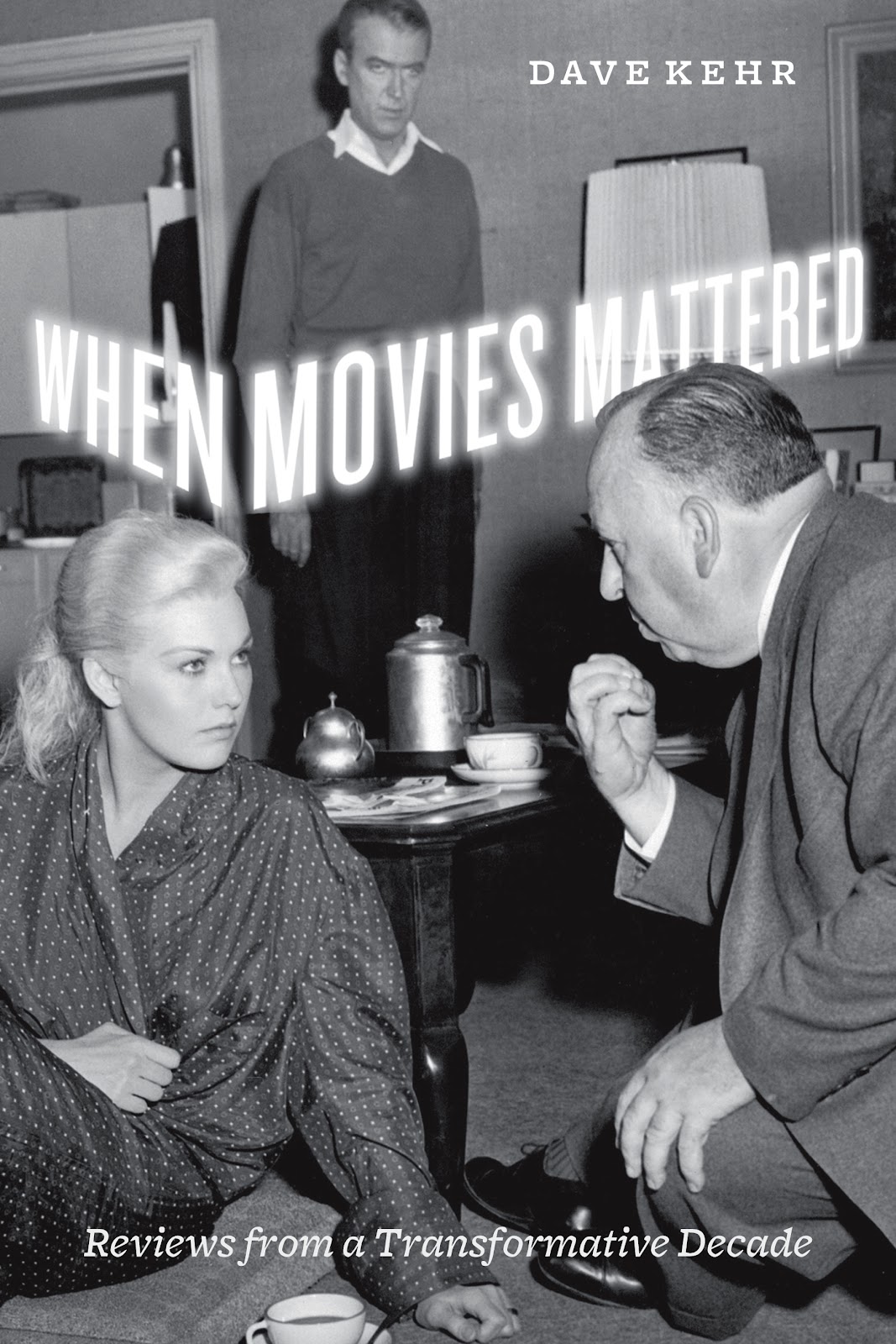
This is the kind of volume that has the power to inspire an aspiring film critic like myself to step up one's game. Dave Kehr offers up insight after insight in this anthology of his work for the Chicago Reader during the '70s and '80s—but the most admirable thing about Kehr's approach is how humble and subservient he is to the films he reviews and the artists he champions. Those who think they know Kehr only through his Chicago Reader capsules and weekly New York Times DVD column owe it to themselves to pick up this book and see new sides not only of him as a writer and critic, but of the films he writes so accessibly about.
Other memorable literary discoveries:
  • Howl and Other Poems (1956, Allen Ginsberg): On a whim, I picked up a copy of this while visiting the landmark City Lights Bookstore in San Francisco in October (fitting, since it was through the obscenity trial that resulted from its publication of this slim volume that the bookstore itself became famous). Having never read it before, I proceeded to be wholly blown away by the urgency and passion in Ginsberg's language, beautiful in its own angry way.
  • Jane Eyre (1847, Charlotte Brontë): Here's another one I somehow avoided reading in high school/college until this year. Jane Eyre's journey to independence and maturity is still as inspiring as it ever was. (I still haven't seen Cary Fukunaga's recent film adaptation, released this year.)
  • Miss Lonelyhearts (1933, Nathanael West): a fascinating irony-drenched black comedy about a man who seemingly bears the weight of the world on his shoulders, whether he really ought to or not
  • The Sun Also Rises (1926, Ernest Hemingway): Gorgeous and heartbreaking, this Hemingway classic offers a corrective to the half-hearted critique of fantasy nostalgia Woody Allen offered up in Midnight in Paris (I tried to explain my thinking on that point here).
  • The Temple of the Golden Pavilion (1956, Yukio Mishima): one of the most vivid and unsettling portraits of neurotic madness I've ever read

Theater

Follies (1971, Stephen Sondheim), seen at Marquis Theater in New York
There were more adventurous works of theater I saw this year, but none of them delivered the kind of emotional insight Eric Schaeffer's revival of Stephen Sondheim's 1971 musical offered up in spades. It's the kind of brilliant revival that may well have you saying "They don't make them like they used to"—rather fitting for a musical about aging and the compromises in life.

Other memorable theatrical discoveries:
  • Gatz (2005, Elevator Repair Service), seen at McCarter Theatre in Princeton, N.J.: This word-for-word, six-and-a-half-hour stage adaptation of F. Scott Fitzgerald's The Great Gatsby is as much a meditation on the act of adaptation as it is a singular experimental theater piece by its own right. (Not too far behind this: The Select (The Sun Also Rises), Elevator Repair Service's adaptation of the aforementioned Hemingway novel—less daring, perhaps, but just as inventive and perhaps even more affecting. Also, I'd be remiss if I didn't give a shout-out to another accomplished feat of book-to-stage adaptation, Amon Miyamoto's Japanese-language stage version of The Temple of the Golden Pavilion.)
  • Krapp's Last Tape (1958, Samuel Beckett), seen at Brooklyn Academy of Music in Brooklyn, N.Y.: In a mere 55 minutes, John Hurt managed to suggest a whole lifetime of bitter experience in Samuel Beckett's typically stripped-down, one-act, one-man drama.
  • The Normal Heart (1985, Larry Kramer), seen at the Golden Theatre in New York: This revival of Larry Kramer's chronicle of the stirrings of AIDS awareness in the early '80s unexpectedly hit the zeitgeist when New York officially legalized gay marriage earlier this year. Thankfully, The Normal Heart—at least in this deeply moving production—plays surprisingly well as character drama, not just as polemic. 
  • Satyagraha (1979, Philip Glass), seen at Metropolitan Opera House in New York: Less a conventional opera than a philosophical meditation on the intersection of the political and the personal, Philip Glass's opera—given a fascinating and moving production by the Metropolitan Opera—still packs a mighty punch today, especially in the shadow of the Occupy Wall Street movement.
  • Sleep No More (2011, Punchdrunk), seen at the McKittrick Hotel in New York: To wander around the various floors and hallways of this "immersive" adaptation of Shakespeare's Hamlet is to not only find yourself ensconced in a whole new world, but to feel the possibilities of theater expand right before your very eyes. Love it or hate it, there was certainly nothing else quite like it.

Music


Inuksuit (2011, John Luther Adams), seen at Park Avenue Armory in New York
No album I listened to, or concert that I went to, was quite as mind-blowing as John Luther Adams's astonishing feat of musical daring: a work that literally created a whole environment of sounds from the bottom up and asked us listeners to wander around and create our own musical experience from it. It is, I daresay, the closest to a musical equivalent of Playtime as I've ever come across. (I wrote more about it here.)

Other memorable musical discoveries:
  • Car Wheels on a Gravel Road (1998, Lucinda Williams): still the alt-country rocker's finest collection of songs. That tender grit in her voice never fails to slay me.
  • Egypt (2004, Youssou N'Dour): an act of cross-cultural empathy on a par with Paul Simon's classic Graceland, courtesy of an amazing Senegalese singer
  • How I Got Over (2010, The Roots): This may be my favorite Roots album, brimming with a lyricism and thematic ambition that makes it stand out among the rest of this hip-hop group's post-Things Fall Apart outlook. It's too bad it took me 'til this year's release of their latest (and very fine) album, Undun, to finally get around to listening to Black Thought, ?uestlove & co.
  • Nine Types of Light (2011, TV on the Radio): Their 2008 album Dear Science was my breakthrough with this much-acclaimed Brooklyn-based band, and their latest album continues the gorgeous melodies and joyous experimentation of that one.
  • Station to Station (1976, David Bowie): I had never listened to much of Bowie's music before seeing the Bowie-led Nicolas Roeg film The Man Who Fell to Earth for the first time this year. Eventually, I got around to delving into this famous glam rocker's catalog...and of all the records he cut during his prime (late '60s/'70s/early '80s, roughly), this is the one I return to the most, the one with arguably his most daring cuts (the 10-minute title track, for one) and his most soulful (for him) vocals. (His follow-up, Low, runs a close second.)
  • Vespertine (2001, Björk): my favorite album from the Icelandic pop songstress, lush, whimsical and beautiful. (Her most recent album, Biophilia, is...okay, I guess.)
  • W H O K I L L (2011, tUnE-yArDs): Actually, I think I like both this and BiRd-BrAiNs about the same, but W H O K I L L announces its greater ambition straight away with its first cut, "My Country." Either way, though, Merrill Garbus's bracingly low-fi music scintillates and engages.
  • 劉美君 (1986, 劉美君): I wasn't as vigilant with Chinese-pop explorations as I have been in previous years, so my usual C-pop discovery of the year automatically goes to this one, the debut album of Prudence Liew, a singer who somehow makes her lack of vocal grace an asset rather than a drawback.

Tomorrow, on New Year's Day: the film-related lists you've surely all been waiting for. Stay tuned!

Wednesday, December 28, 2011

Literary Interlude, Agnostic Edition

BROOKLYN, N.Y.—

Colonel Cathcart went away from General Dreedle with a gulp and kicked...[C]haplain [Tappmann] out of the officers' club, and it was exactly the way it almost was two months later after the chaplain had tried to persuade Colonel Cathcart to rescind his order increasing the number of missions to sixty and had failed abysmally in that endeavor too, and the chaplain was ready now to capitulate to despair entirely but was restrained by the memory of his wife, whom he loved and missed so pathetically with such sensual and exalted ardor, and by the lifelong trust he had placed in the wisdom and justice of an immortal, omnipotent, omniscient, humane, universal, anthropomorphic, English-speaking, Anglo-saxon, pro-American God, which had begun to waver. So many things were testing his faith. There was the Bible, of course, but the Bible was a book, and so were Bleak House, Treasure Island, Ethan Frome and The Last of the Mohicans. Did it indeed seem probable, as he had once overheard Dunbar ask, that the answers to the riddles of creation would be supplied by people too ignorant to understand the mechanics of rainfall? Had Almighty God, in all His infinite wisdom, really been afraid that men six thousand years ago would succeed in building a tower to heaven? Where the devil was heaven? Was it up? Down There was no up or down in a finite but expanding universe in which even the vast, burning, dazzling, majestic sun was in a state of progressive decay that would eventually destroy the earth too. There were no miracles; prayers went unanswered, and misfortune trampled with equal brutality on the virtuous and the corrupt; and the chaplain, who had conscience and character, would have yielded to reason and relinquished his belief in the God of his fathers—would truly have resigned both his calling and his commission and taken his chances as a private in the infantry or field artillery, or even, perhaps, as a corporal in the paratroopers—had it not been for such successive mystic phenomena as the naked man in the tree at that poor sergeant's funeral weeks before and the cryptic, haunting, encouraging promise of the prophet Flume in the forest only that afternoon: Tell them I'll be back when winter comes.

—Joseph Heller, Catch-22 (1961)

Even amidst all the bits of scalding satire contained in Heller's classic American novel, there are moments that cut through pitch-black-comic surface and get at something emotionally and even philosophically real. Above is one particular passage that really got to me; it's as dead-on an encapsulation of the reasons behind my own agnosticism as any I've come across in a work of literature.  Granted, this comes in the context of a character—a naive army chaplain—who, rather than being an agnostic/atheist from the start, is a deeply religious man who experiences a crisis of faith as this particular war drags on. Still, the confusion Heller articulates, with near-unnerving directness, more or less aligns with the kind of confusion I feel whenever I get around to contemplating matters of religion and spirituality.

I'm still reading Catch-22, by the way (I'm almost finished with it), but so far I'm finding it about as brilliant as its reputation—a thorough savaging of the absurdities of life during wartime, by turns hilarious and infuriating. It's snarky and sometimes just plain insane, but at heart Heller's vision is deeply, bleakly humane—as passages like the one above attest.

Monday, December 26, 2011

Artistic Consumption Log, Dec. 19, 2011 - Dec. 25, 2011: Christmas Weekend Edition

EAST BRUNSWICK, N.J.—Yesterday was Christmas.

Yeah, that's pretty much the only excuse I have for not annotating this week's artistic consumption log below. I was all set to sit down and take some time to annotate it yesterday, but my will failed me. Call it "the Christmas spirit" or just plain "laziness" if you will, but I felt more like hanging out with friends/folks yesterday rather than sitting down in front of my computer and coming up with substantive things to say about everything I consumed artistically this past week (which ended up being quite a lot, actually).

So this week's log is a barebones one. Next week's will most likely be barebones as well, but we'll see about that.

In the meantime...well, it's a day late (but hopefully not a dollar short), but here, for your viewing pleasure, is that immortal holiday chestnut "Have Yourself a Merry Little Christmas" as sung by Judy Garland in one of the films I saw this past week, the classic 1944 musical Meet Me in St. Louis (yes, for the first time—and it is glorious indeed). That film, by the way, is the one that introduced that song to the world—which partially explains why the lyrics are a little different than what you might be used to hearing.

Plus, sprinkled in this week's log are some personal Christmas traditions: viewings of the first two Die Hard films as well as a Christmas-set episode of The X-Files! (I've already thought of a different choice for next year's Christmas movie entertainment, though: Wong Kar-Wai's 2046. Hey, it's got scenes set on Christmas Eve! It works!)

Happy holidays!


Films

★ The Servant (1963, Joseph Losey), seen at IFC Center in New York

★ The Gold Rush (1925, Charlie Chaplin), seen at Film Forum in New York

★ Meet Me in St. Louis (1944, Vincente Minnelli), seen on Turner Classic Movies in East Brunswick, N.J.

★ Die Hard (1988, John McTiernan), seen on Netflix Instant in Hillsborough, N.J. [fifth viewing]
★ Die Hard 2 (1990, Renny Harlin), seen on Blu-ray in East Brunswick, N.J. [fourth viewing]

The Girl With the Dragon Tattoo (2011, David Fincher), seen at AMC Bridgewater Commons in Bridgewater, N.J.

Television

★ The X-Files: "How the Ghosts Stole Christmas" (Season 6, episode 6) (1998, Chris Carter), seen on DVD in East Brunswick, N.J. [fourth viewing]

Music

★ Game Theory (2006, The Roots)
★ Rising Down (2008, The Roots)
★ How I Got Over (2010, The Roots)
★ Undun (2011, The Roots)

The Embracers, seen at The Bitter End in New York

Thursday, December 22, 2011

Are You There, Moviegoers? It's Me, Margaret.

NEW YORK—


My latest film review published somewhere other than this blog was posted on Tuesday at In Review Online. Under consideration: Margaret, Kenneth Lonergan's film maudit that, even in something less than its creator's ideal form, is one of the best films of 2011. The film is so filled-to-bursting with ambition, beauty and humanity that I could hardly articulate everything I love and admire about this film in one single review...so at the very least, I hope this piece will serve as a starting point for discussion—especially now that it's getting a re-release at Cinema Village here in New York starting tomorrow! Go see it; it's amazing.

Wednesday, December 21, 2011

Artistic Consumption Log: Dec. 12, 2011 - Dec. 18, 2011: "I'm Late, I'm Late" Edition

NEW YORK—I'm already super-late with this latest artistic consumption log, so let's get right to it, shall we?

Elevator Repair Service's Gatz at McCarter Theatre in Princeton, N.J.

Films

★ Moneyball (2011, Bennett Miller), seen at AMC Empire 25 in New York
Screenwriters Steven Zaillian and Aaron Sorkin locate the beating human heart in Michael Lewis's nonfiction book about Oakland Athletics general manager Billy Beane and the near-miraculous 2002 season his team had, and fashions a solid screenplay that receives sturdy direction from Bennett Miller and fine central performances by Brad Pitt as Beane and Jonah Hill as statistics-minded assistant GM Peter Brand (a character that is actually a fictionalized amalgamation of a few real-life characters).

For the most part, though, I enjoyed Moneyball out of personal nostalgia. Back in 2002, I followed professional baseball a lot more closely than I do now (that dissipation of interest is a hazard of following a team as perpetually disappointing as the New York Mets), and so I found myself smiling and nodding in recognition throughout this film, remembering a lot of details about the season this film depicts. If anything, Moneyball left me feeling the same way Beane felt towards the end as he was deciding whether to leave the A's and take a high-paying new position in Boston. "It's so easy to be a romantic about baseball," he says. The moment he said that, I started feeling a bit romantic about the sport myself, missing the days when I was a more intense baseball fan.

Rest assured, though, that Moneyball has more to it than nostalgia value. Once again, an all-American sport is made the backdrop of larger themes and dichotomies: haves vs. have-nots; the coldness of numbers vs. the warmth of human interaction; romantic idealism vs. harsh reality. (In those ways, it wouldn't be too far off to think of this film as a fitting follow-up to last year's Sorkin-scripted The Social Network, with baseball substituting for Facebook.) Thankfully, Miller mostly stays out of the way of the script and the actors, allowing the themes to come through sufficiently. It also has one standout scene: a real-time negotiation-by-phone in which Beane, with Brand in tow, tries to land a certain pitcher he desperately wants on his team. The highest compliment one could pay to Moneyball is that it manages to fashion a gripping human drama out of the potentially dry subject of baseball's behind-the-scenes business machinations.

★ Mission: Impossible—Ghost Protocol (2011, Brad Bird), seen at AMC Loews Lincoln Square 13 in New York
If anything, I found this an even more consistently enthralling an action picture than Steven Spielberg's still quite enjoyable The Adventures of Tintin—which means this fourth installment in the Mission: Impossible series at least comes within striking distance of securing a spot in my personal pantheon of great Bruised Forearm entertainments (I wrote about previous inclusions into that canon here, here and here). Perhaps Brad Bird showed more "heart" in his animated features (The Iron Giant, The Incredibles, Ratatouille)...but the action sequences here are so deliriously conceived and superbly wrought that that I can't find myself be bothered by the two or three moments of attempted character drama that don't fully come off (though that's one or two more than Spielberg really tried for in Tintin). And yes, this is absolutely worth seeing in IMAX, which is how I saw it; in fact, it was the first time since I was a kid (read: younger than 10) I had seen anything in a legitimate IMAX format (no, my second go at The Dark Knight at one of AMC's fake IMAX theaters in New Jersey doesn't count).

★ Nashville (1975, Robert Altman), seen at Museum of the Moving Image in Queens, N.Y. [second viewing]
I'm not sure if anyone has invoked Jacques Tati's Playtime (1967) in talking about Altman's 1975 masterpiece, but, watching this film for a second time—my first time on a big screen—I couldn't help but think of Tati's film in Altman's less overtly formal and more "humane" approach: Nashville's de-emphasis on central characters; its generosity in depicting various points of view; its spirit of inclusiveness with even the most selfish and/or self-delusional of characters. It's a human mosaic, not a message movie or political screed (this is why a film like Paul Haggis's openly schematic Crash—with its thin, position-paper characterizations—dishonors the "network narrative" form Altman pioneered); Altman might have his own personal vision of America in mind, but that doesn't mean he doesn't try to air out different points of view to complicate that vision. And once one gets attuned to Altman's deliberate looseness with narrative, Nashville becomes, well, pleasurable. Many have tried to match it (even Altman himself, with later mosaics like A Wedding, Short Cuts and Gosford Park) , but even now, there has still never been a film quite like it.

Music

★ Phrenology (2002, The Roots)
★ The Tipping Point (2004, The Roots)
Phrenology pushes The Roots' hip-hop sound and lyrical substance even further than Things Fall Apart did; by contrast, the relatively more conventional The Tipping Point comes off as something of a creative breather for the group, though still an enjoyable one. That's pretty much all I have to say about these two albums (really, I try, but I'm no music critic, folks).

★ 塵緣 (1985, 蘇芮) [third listen]
Finally—a chance to offer up a few words about one of my favorite Mandarin pop albums! I've mentioned 蘇芮—who also went by the Western name "Julie Su"—before; Jia Zhang-ke fans surely know who she is (she sings the song on the radio Zhao Tao dances to by herself in his 2001 film Platform). This 1985 album—her greatest album of the '80s, in my opinion—doesn't feature that song, though. Instead, it features the title track, a glorious nine-minute epic about the overcoming of heartbreak that is quite possibly one of the greatest cuts you've never heard.

Don't believe me? Check it out here (and to my mind, you don't need to understand what she's singing to get the gist; the music and her impassioned voice, signify everything that needs to be, uh, signified):


The rest of the album is pretty great, too—some of the most adventurous pop music Julie Su ever recorded, by turns rocking, spacey, surreal, romantic, regretful, and ultimately heroic. (If I've piqued your interest in it at all, you can pick up a copy here at YesAsia.com.)

Theater

★ Gatz (2010, Elevator Repair Service), performed at McCarter Theatre in Princeton, N.J.
Yes, I traveled all the way down to Princeton, N.J., to see this highly acclaimed six-hour theatrical adaptation of F. Scott Fitzgerald's The Great Gatsby live—and I paid quite a lot for the privilege ($150, more or less). It was worth every penny.

If you've heard anything about Elevator Repair Service's Gatz, you'll perhaps know of it as "that word-for-word stage adaptation of The Great Gatsby." There's more to it than that, though. Here's the set-up: A lowly office worker runs into computer problems during a normal day at the office, opens up his Rolodex and, lo and behold, finds a copy of The Great Gatsby sitting in it. He opens up the book, starts reading...and then gradually, within that one office set, the novel starts to come to life around him, even as "Nick Carraway"—because, of course, Fitzgerald's story is told from Nick's point-of-view—keeps reading from the book, which he holds in his hand (most of the time, at least) as he reads aloud every single word. This guy doesn't just read The Great Gatsby; he gets lost in it, the way anyone would get lost in any engrossing novel or work of art.

But wait, you might be asking at this point: Doesn't that set-up suggest that Gatz essentially adds up to little more than a staged recitation of this American literary classic? No. Judging by The Select—the Elevator Repair Service's stage adaptation of Ernest Hemingway's The Sun Also Rises that I saw earlier this year here in New York (I offered up some commentary on it here)—this company thrives on finding inventive ways to illustrate great literary texts on stage, and a lot of the playful frisson of Gatz comes from the way they experiment with lighting, staging and acting to not only bring The Great Gatsby to life within its deliberately limited means, but to turn the whole production into an indirect meditation on the sheer act of book-to-stage adaptation. Simplification and/or compression is often the name of the game when it comes adapting a work from one medium to another; here, though, director John Collins and company apparently decided to try the opposite approach, presenting the whole work in toto. And yet...for one thing, listen to the way Scott Shepherd, who plays Nick/the narrator, subtly conveys different modes of engagement with the material he's reading aloud. Sometimes he gets fully into it, most notably in early party scenes and during Daisy's first reacquaintance with Gatsby; other times he just reads perfunctorily, as if figuring the language would take care of itself. Shepherd, in other words, gives a real performance even as just a "reader"; his feat of acting, among other details, is enough to get one to reflect on one's own preconceived notions about what's "theatrical" or not. Surely it's telling, then, that when Shepherd finally puts away the book and recites its final chapter from memory, his performance, freed from the shackles of the text, suddenly achieves a sense of creative freedom that was not consistently apparent throughout the rest of the production.

Of course, Gatz still works quite grippingly as a straight-up stage adaptation of The Great Gatsby—as long as you don't go in expecting fresh revelations about this much-discussed work of 20th-century art. As an adaptation, it's more about imaginative illustration than profound illumination. Its provocations lie elsewhere. The Elevator Repair Service seems to have decided that—unlike Gatsby and his attempts to remake himself into the man of his and Daisy's dreams—the only truly honest way to "adapt" The Great Gatsby to the stage would be to allow the words to speak for themselves while still trying to make it play as a work of theater. Is this maybe the only way to truly do justice to a literary work in a different medium? In being retrograde in its approach to adaptation, Gatz is also, paradoxically, more daring.

All of that basically sums up my disorganized, incoherent, complicated thoughts on this monumental work, simultaneously an act of theatrical hubris and artistic humility. It's coming back for an encore theatrical run at the Public Theater in New York in the spring (details here); if you're willing to put in the time and money for it, I think it'll be worth your while—at least if you're game for having your conception of the possibilities of theater rocked to its core.

Monday, December 12, 2011

Artistic Consumption Log, Dec. 5, 2011 - Dec. 11, 2011: Birthday Celebration Edition

NEW YORK—I'm really starting to think that San Francisco bit me with some kind of "chill out" bug when I was there at the end of October—a bug that has led me to drastically slow down my culture intake. Two films? Only two? I usually manage, like, four or five in a week. What is wrong with me?


Maybe I should blame OKCupid (of which, the less said about it, the better—but if you want to ask, feel free to ask me about it). That and my 26th-birthday celebration (which went extremely well, if you wanted to know).

Anyway...here's a summary of my week in artistic consumption.

Krapp's Last Tape (photo credit: Anthony Woods)

Films

★ A Dangerous Method (2011, David Cronenberg), seen at Landmark Sunshine Cinema in New York
There are, I admit, moments in this adaptation of Christopher Hampton's stage drama about the clash between Carl Jung (Michael Fassbender) and Sigmund Freud (Viggo Mortensen) in which David Cronenberg's surgical precision leads the film to plod a bit too much for my taste; I guess there's only so much even a brilliant visual artist like Cronenberg can do with such inherently talky material until it starts to feel, well, talky. Even at its saggiest, though, form follows function in A Dangerous Method: a wholly intellectual battle of wits gets an appropriately clinical treatment in Cronenberg's hands, the better for its stabs of underlying human anguish—Keira Knightley's virtuoso spasms of hysteria, Jung's attempts to repress his sexual urges—to puncture through the good surface manners with an unexpected emotional force. Its final image—which, now that I think about it, is remarkably similar to the final image of Cronenberg's last film, Eastern Promises, in terms of how much it implies about a character's persisting inner demons—is especially striking in that regard.

So yeah, I liked, if not necessarily loved, A Dangerous Method. If nothing else, I'm now much more interested in reading Jung and Freud than I was going into the film.

★ The Adventures of Tintin (2011, Steven Spielberg), seen at Regal E-Walk Stadium 13 in New York
I'm afraid of breaking any sort of review embargoes that Paramount might have imposed on this film, which, thanks to a roommate of mine, I was able to see at an early screening. (I guess I have the recent David Denby/The Girl With a Dragon Tattoo brouhaha in mind in my anxiety.) So I won't say too much about it now...except to say that if you're a fan of Spielberg's classic action-adventure film Raiders of the Lost Ark, you will likely enjoy this, too.

Music

★ The Roots Present: an undun performance..., seen at Highline Ballroom in New York
Illadelph Halflife (1996, The Roots)
★ Things Fall Apart (1999, The Roots)
I recently decided to dive into the music of The Roots because of a concert of theirs I agreed to go see with two of my roommates on Tuesday night. Alas, I wasn't able to listen to all of their albums before going to the concert—which was, in part, meant to promote their latest album, Undun—so I watched Black Thought, ?uestlove & co. more as a detached spectator than as a passionate longtime fan. I still enjoyed the experience, though; having only heard their first two albums, Organix and Do You Want More?!!!??! by that point, I found it interesting that their early stabs at infusing jazz elements into their hip-hop had, by all appearances, flowered into something grander, as evidenced by the group's inclusion of full-blown brass instruments (tuba, trumpets, saxophone).

Later in the week, I got around to listening to their next two albums after Do You Want More?!!!??! I didn't notice quite as much of the smooth-jazz sound in these two albums; if anything, Illadelph Halflife and Things Fall Apart seem to mark a move away from that to something approaching straight hip-hop. Perhaps I have some more experimentation to expect from The Roots as I go further into their recorded output to date. In the meantime, allow me to express my full admiration for the band's consistently intelligent and inventive rhymes, always showing an awareness of the outside world even when they rap about themselves (no Kanye West-like self-involvement here).    

Theater

★ Krapp's Last Tape (1958, Samuel Beckett), performed at Brooklyn Academy of Music in Brooklyn, N.Y.
Samuel Beckett did indeed write plays other than Waiting for Godot, and on Friday night, I saw one of them: a 55-minute one-man play in which a sick, elderly man plays an old audio recording of himself made years ago, tries to record a new one, eats some bananas, drinks a lot, and just generally feels disappointment at what he considers a wasted life. This production, directed by Michael Colgan and starring John Hurt, is equally spare in execution: The set is basically just a table on a stage, no other sets in sight, with light literally boxing Krapp in (and this boxing-in is turned into a visual joke at one point when Hurt plays peekaboo with the darkness outside of that box of light). Krapp is imprisoned not only by light, but by his own memories of missed and failed opportunities. Depressing? Sure. But, as with the best "depressing" art, the sense of invention on display as well as its range of emotion—from bleak humor to deep despair—is genuinely enlivening. Did I mention it's only 55 minutes long? And yet, one feels, within those 55 minutes, as if one has experienced a précis of a whole lifetime of experience.

Krapp's Last Tape is running until Dec. 18 at BAM's Harvey Theatre. It's well worth your time. If you aren't able to see it, though...well...look what I found on YouTube!


Apparently, way back in 2000, Atom Egoyan, as part of a British TV series entitled Beckett on Film, shot a film version of Krapp's Last Tape with...John Hurt as Krapp! Someone was nice enough to upload the whole hour-long work to YouTube. For those who aren't able to see Hurt act live onstage, I guess this offers you all a second-best option.

Tuesday, December 06, 2011

Artistic Consumption Log, Nov. 28, 2011 - Dec. 4, 2011: 26th Birthday Edition

NEW YORK—Sunday, Dec. 4, 2011, was my 26th birthday.

Yeah, that flatly declarative statement gives you an idea of how eventful my 26th birthday actually was. But that's okay; I'm putting off my official celebrating until Friday night, with a party in the works at a place in the East Village! Details, for those of you readers of this here blog who aren't on Facebook, are forthcoming (at least, if I feel like broadcasting them far and wide)...

Until then...there's this log—which, to be perfectly frank, I felt too lazy to annotate on Sunday on account of it being my birthday and all. So, for another week, at least, I'll leave this as a barebones thing.

By the way, for those who hadn't figured this out yet: For the still photos that usually precede these logs, I usually try to pick one from the work of art that impressed me most throughout the week. This past week, though, I found myself experiencing the most sheer awe at a program at the Park Avenue Armory of modern dance works conceived by Chinese choreographer Shen Wei and performed by his Shen Wei Dance Arts company. In this case, only a video, I felt, could hope to give you a sense of what I witnessed. Here below, then, are clips from Folding, a Buddhist-inflected work full of hypnotically slow movements, spare yet dizzying costume designs and a gradually enveloping sense of stillness. These selections don't come close to conveying a sense of the whole, but for now, at least, it's close enough:


Films

★ Four Adventures of Reinette and Mirabelle (1987, Eric Rohmer), seen at Film Forum in New York

★ Carnage (2011, Roman Polanski), seen at Sony Pictures Screening Room in New York

★ Hugo (2011, Martin Scorsese), seen at Clearview Chelsea Cinemas in New York

Possession (1981, Andrzej Zulawski), seen at Film Forum in New York

Music

★ Organix (1993, The Roots)
Do You Want More?!!!??! (1995, The Roots)

★ 出塞曲 (1979, 蔡琴) [second listen]

Dance

★ Shen Wei Dance Arts, seen at Park Avenue Armory in New York

Tuesday, November 29, 2011

Artistic Consumption Log, Nov. 21, 2011 - Nov. 27, 2011: Thanksgiving/Wedding Edition

BROOKLYN, N.Y.—This past week was dominated not just by Thanksgiving and heavy eating, but also by the wedding of two dear friends of mine back in New Jersey (one of whom I've known since high school, and possibly earlier).

The ceremony was held on Saturday down in Long Beach Island, a scenic beach town that I raved about once before on this blog here. The weather couldn't have been better for this special occasion; the venue was surrounded by lake-side dusk views such as this...


...and this:


The wedding was on Saturday afternoon, but, because I was asked to be an usher at the ceremony, I and a bunch of friends went down to the area on Friday—so I got a chance to sit it on a brief rehearsal as a result of being there a day early. I hadn't been to many weddings before this one—the last one I was at was maybe two years ago, and I wasn't involved in the actual ceremony—so I think this was the first time I realized just how much planning goes into an event. The couple had hired a wedding planner to help organize the whole thing, and as I witnessed the rehearsal, I realized that wedding planners are, in essence, a ceremony's equivalent to an orchestra conductor and, to an arguably lesser extent, film/theater directors: vessels in which to help realize a personal vision. Because what are weddings like these other than grand staged productions for the benefit of friends and family, with many different avenues for creativity within a certain traditional structure?

By that logic, then, the wedding ought to be included in the artistic consumption log...and so that's what I've done, as you will see all the way at the end of this post. It really was a wonderful ceremony, a heartening celebration of the official union of a cute couple that deserve all the happiness in the world. It certainly brought out the sentimental romantic in me—and I tend to treasure experiences that have that kind of effect on me, artistic or not.

Plus, the ceremony offered many photogenic opportunities such as this shot of the chapel, which I consider a tribute of sorts to John Alcott, the cinematographer who famously shot Stanley Kubrick's Barry Lyndon with the kind of candlelit natural light you see here:


All I was missing was a Carl Zeiss lens!

***

Before I get to my log proper—which, because of a lack of time during a whirlwind weekend, I present without annotations—I will, for the sake of completeness, mention a few titles I watched but left off the log, for various reasons:

  • The Lady Eve (1941, Preston Sturges). When I came back to home to East Brunswick, N.J., on Thursday night (yes, I worked on Thanksgiving, as I've done for the past four years now at The Wall Street Journal), I tuned into Turner Classic Movies and discovered, to my delight, that they were screening this screwball classic. Later on, though, I became distracted by certain wedding obligations that popped up, so my attention wasn't as riveted to the film during its last half-hour as it was during its first hour. So I'm not counting it. (Hey, it's my log; I have my own rules here!) This, by the way, was my second time seeing it—but this scene I've seen, oh, about five more times since the first time.
  • Hall Pass (2011, Peter & Bobby Farrelly). This was one of three pay-per-view films I watched on Friday night with my friends in the hotel room we all shared. Again, my attention wavered throughout, so I'm not including it in the log; plus, I'm pretty sure we were watching it in the wrong aspect ratio, anyway (stretched-out 1.33:1). For what it's worth, based on what I saw, I found this actually pretty passable, sometimes inspired and occasionally painfully truthful about relationships and male behavior—in other words, not quite as bad as its initial reviews made it out to be. I'll have to revisit to confirm, though.
  • Debbie Does Dallas (1978, Jim Clark) and Debbie Does Dallas...Again (2007, Paul Thomas). These are the other two films I saw on Friday night—yes, pornography. (Too much information?) But hey, one of them is considered a classic of the genre, after all—one I had never seen. So naturally, I was curious about it simply on the basis of its reputation. Once again, I'm pretty sure we watched both of these in the wrong aspect ratio, and I spent as much time joking about what were watching as I spent watching it, so I'm relegating them to this preface rather than listing them in the log proper. Not that making an effort to actually watch either of these would make them any better. If anything, the "sequel"-in-name-only Debbie Does Dallas...Again has more extravagantly outrageous (read: hotter) sex scenes than anything in the cheesy and slightly monotonous 1978 original. (The only thing that elevates Debbie Does Dallas compared to Debbie Does Dallas...Again, really, is that all of the breasts in it are, as far as I know, real. That's a big deal, in my book.) I say that as no expert in adult entertainment, however...

***

A Confucian Confusion (1994)

All right...here's what I officially took in artistically this past week (the best of the bunch being Edward Yang's rich, underseen modern tapestry A Confucian Confusion):

Films

★ Pariah (2011, Dee Rees), seen at Universal Studios Screening Room in New York

★ A Confucian Confusion (1994, Edward Yang), seen at Walter Reade Theater in New York
★ Mahjong (1996, Edward Yang), seen at Walter Reade Theater in New York

Music

Biophilia (2011, Björk)

★ Caterwaul of Sound Does The Cramps' Bad Music for Bad People, seen at Arlene's Grocery in New York

Other

★ Traci and Adam's Big Day, seen at Bonnet Island Estate in Long Beach, N.J.

Tuesday, November 22, 2011

Artistic Consumption Log, Nov. 14, 2011 - Nov. 20, 2011

BROOKLYN, N.Y.—Late again, I know...but at least I'm producing content, right?

The Crowd (1928)

Films

★ The Crowd (1928, King Vidor), seen at Film Forum in New York [third viewing]
With this third viewing of The Crowd—and my first time seeing it in a (brand new) 35mm print with live piano accompaniment—I finally confirmed that King Vidor's masterwork does indeed have a place in my personal cinematic pantheon (I previously pooled some brief thoughts on it at my blog here). The only revelation I experienced this third time around, really, is a more acute realization of just how bitterly ironic this film actually is about its main character John's self-delusions and the American dream in general. The Crowd is a genuinely wounding film in that regard...which is not to say that it doesn't exude a deep empathy for these characters. The brilliance of its final shot—the camera dollying away from John, Mary and their son laughing in a theater to reveal their insignificance within the larger crowd of doubled-over spectators—is that it's a happy ending with a deeply pessimistic undertone. John hasn't become the great man his parents raised him to think he would become—but at least he now understands his place in society and can go on living with a sense of hope going forward. It's better than nothing, one could rationalize. Where is this film on DVD, seriously??? It's one of the great American films!

★ Sons of Shiva (1985, Robert Gardner), seen at Film Forum in New York
★ Forest of Bliss (1986, Robert Gardner), seen at Film Forum in New York
Sons of Shiva is a reasonably engrossing half-hour look at a four-day ceremony held in India celebrating the titular Hindu god, but it's utterly conventional compared to the evocative and haunting Forest of Bliss, in which Gardner drops voiceover narration altogether and takes a more mosaic-like approach to depicting life in Benares, India, a harbor town that seems to exude death at just about every corner. There's not much else to say except: watch it and bask in it.

★ House of Pleasures (2011, Bertrand Bonello), seen at IFC Center in New York
This hasn't been released yet; I saw this at a press screening on Friday. But when it begins a theatrical run here in New York at IFC Center this Friday, I urge you all to check this out. This is one of the most gorgeous-looking films released this year (Josée Deshaies's cinematography has a silken, velvet-y beauty to it with its brown-ish interiors), but its surface beauty belies a fascinating and evocative look at not only the titular brothel that is close to the end of its existence at the turn of the 20th century, but at the sometimes porous intersections between memory and history.

★ Tinker Tailor Soldier Spy (2011, Tomas Alfredson), seen at Park Avenue Screening Room in New York
This hasn't been released yet, either, and thanks to an embargo imposed by Focus Features, I can't say too much about it until its official theatrical release on Dec. 9. For now, I'll just say that it's pretty good—superbly acted and astonishingly well-directed, if hardly the most electrifying of its genre around.

★ Tales from the Gimli Hospital (1989/2011, Guy Maddin), seen at Walter Reade Theater in New York
This, Guy Maddin's first feature—and my first Guy Maddin feature—was screened in a revised version and a brand new live score commissioned by Performa 11, a performing-arts biennial that has been running here in New York since Nov. 1. After sitting through its 65 bizarre minutes, I'm certainly interested in seeing how this differs from the version that is currently available on Kino Video DVD. The film itself is enjoyably unhinged, even if resonance remains rather thin at the end. Basically, it's a nonstop parade of increasingly wild dream imagery, a film that often recalls the straight-from-the-id quality that characterizes David Lynch at his feverish best. Maddin's main distinguishing feature is a certain affection for old-movie tropes: flickering black-and-white cinematography with moments of color tinting, a post-synch soundtrack that is nevertheless mostly dominated by live-orchestra accompaniment, etc. But Tales from the Gimli Hospital isn't a wallow in silent-era nostalgia like Michel Hazanavicius's recent The Artist; Maddin's sensibility somehow manages to feel distinctly personal and modern even with the silent-film hallmarks. I look forward to catching up with the rest of his oeuvre eventually.

Music

★ Volta (2007, Björk)
Here, Björk expands her musical gaze internationally, with cuts that feature African drums, a Chinese pipa and various other worldly instruments in addition to a prominent horn section. Internationalism even seems to be one of its major themes, made especially explicit with its second track, "Wanderlust." Even when her experiments don't always come off—"The Dull Flame of Desire," for instance, drones relentlessly on for seven frankly dull minutes (form following function?)—I continue to find Björk's restlessness refreshing; the hit-or-miss Volta is no exception, even if it is no Vespertine.

Theater

The Infernal Comedy: Confessions of a Serial Killer (2009, Michael Sturminger), seen at Brooklyn Academy of Music in Brooklyn, N.Y.
This past weekend, John Malkovich came to town and performed on the stage of BAM's Howard Gilman Opera House in this theatrical work as Jack Unterweger, an Austrian serial killer who became a cause célèbre among many intellectuals and politicians who campaigned for his early release during his first prison term when it seemed like he was a successful example of a rehabilitated prisoner. Not so, as it turned out when he moved to Los Angeles, became a journalist and killed some more women (he was later caught again, and soon afterward committed suicide in prison).

How were so many people duped into believing his rehabilitated act? Was he really that magnetic a personality? Michael Sturminger's theater piece—a strange mix of stage play and opera—refuses to say. The Infernal Comedy: Confessions of a Serial Killer, it turns out, is less interested in Unterweger himself than in using his story as a springboard for a kind of Brechtian meditation on celebrity, with Unterweger resurrected for an apocryphal book signing in which he divulges some details about his personal life and corrects some misconceptions, but otherwise mostly seems to just dick around while he has a great big joke at our expense onstage ("ha ha, you folks don't really know me after all!"). While Unterweger fools around with us in the audience, two female opera singers frequently interject with Baroque and Classical opera arias (by Gluck, Mozart, Beethoven and the like) that contradict his self-proclaimed "expertise with women"; through these opera selections, these women could be said to collectively express, through old melodramatic forms, the pain of his victims.

All of this sounds conceptually intriguing on paper...but the experience of watching this stretched-thin joke becomes dull and wearying, with no illumination to greet us at the end of its seemingly endless one hour and 45 minutes. The opera scenes go on and on, and there's only so much self-reflexive ribbing I could take before I was tempted to yell at these people to put the damn fourth wall back on. And sad to say, Malkovich only makes things worse. Where's the magnetism that supposedly lured both his victims and an unsuspecting public to side with him? This is just Malkovich being his usual oddball self, sporting a pretty terrible-sounding Austrian accent this time around. (Maybe his casting is basically the performance?) Did Sturminger intend for Unterweger to be so unappetizing from the start that there would be no other conclusion to draw from his life other than that the public at large—and perhaps, by extension, we in the audience—were all dunces for being taken in by this con man? Such bloodlessly intellectualized smugness might be easier to accept as revelatory if the deck didn't feel so stacked from the start.

The Infernal Comedy might be a failure, but I will grant that it at least is an interesting, ambitious failure. But if you're looking for a fourth-wall-breaking take on shallow celebrity...well, might I suggest Nicolas Winding Refn's Bronson, which is, at the very least, far more enjoyable to watch?

Thursday, November 17, 2011

One More San Francisco Vacation Video...With a Vertigo Twist

BROOKLYN, N.Y.—


In this blog entry that I posted while I was in San Francisco, I mentioned that I had visited the Mission Dolores, a historic religious settlement that was not only the city's oldest surviving structure, but was also one of many sites in the city featured in Alfred Hitchcock's Vertigo. Well, I couldn't resist shooting some video while I was wandering around the Mission Dolores graveyard...and then later overlaying a bit of the Vertigo soundtrack onto it: the strangely ethereal music Bernard Herrmann wrote for the moment Scottie spies on the woman he knows as Madeleine Elster visiting the Mission Dolores graveyard and laying a flower on the grave of a Carlotta Valdés. You can hear those gorgeous strings steal into the video about a minute and 25 seconds into it.

Oh...and I realize I never did get around to posting more pictures from my San Francisco trip after my third full day there...so those of you who don't follow me on Twitter and/or Facebook haven't seen photos of my bike trek across the Golden Gate Bridge to Sausalito, or of my visit to the famous Castro Theatre (well, other than the photo I included of its exterior in this artistic consumption log), or even of my day at the races in Berkeley! Perhaps I'll get around to posting some of those eventually here at this blog...once I find the time for it.

Just know that I had a grand time there, and would love to go back one day to explore some more!