Friday, July 01, 2011

Midyear Film Reckoning 2011, In Images

BROOKLYN, N.Y.—I admit, I've been somewhat derelict of my duties as far as keeping up with the new theatrical releases is concerned. The New York repertory-cinema scene is just so abundant in interesting programming that that's often taken priority over always being up to date on the new stuff. (Now, If I had a regular paid film-writing gig, the situation might be different...)

Thanks to some of the various film festivals, both here in and outside of New York, I've attended over the past year, however, I was able to get a bit of a head start on this year's new movies—so, combined with the first-run films I actually managed to see so far in 2011, I was able to come up with 10 that I liked most up to this midyear point. The fact that I have a lot of blind spot probably goes without saying.

Oh, and I include some of my favorite repertory film discoveries so far this year, as well as a bunch of other miscellaneous stuff at the end. Enjoy!

New Releases (feature length, weeklong run or longer)


Repertory Discoveries (feature length, seen in theaters)


The Big Heat (1953)

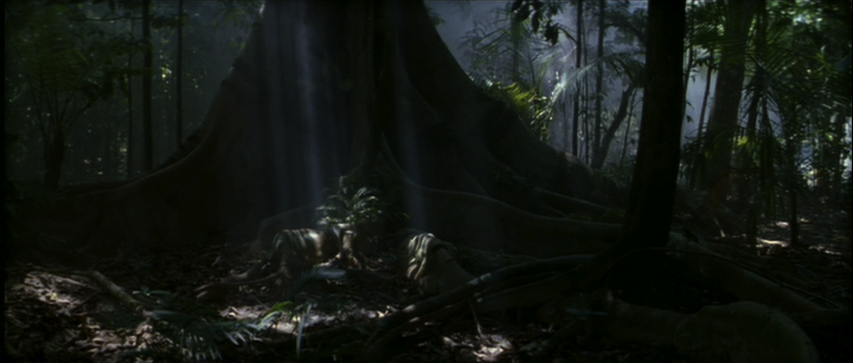
Deep End (1970)


Miscellany (films of less than feature length; or feature-length films seen on DVD or TV, screened for less than a week theatrically, or seen at festivals and currently without theatrical distribution)


Disorder (2009)


Tuesday, June 28, 2011

Literary Interlude, "Putting Midnight in Paris in its Place" Edition

BROOKLYN, N.Y.—

I rang for the waiter. He didn't come and I rang again and then went down the hallway to look for him. [F.] Scott [Fitzgerald] was lying with his eyes closed, breathing slowly and carefully and, with his waxy color and his perfect features, he looked like a little dead crusader. I was getting tired of the literary life, if this was the literary life that I was leading, and already I missed not working and I felt the death loneliness that comes at the end of every day that is wasted in your life. I was very tired of Scott and of this silly comedy, but I found the waiter and gave him money to buy a thermometer and a tube of aspirin, and ordered two citron pressés and two double whiskies. I tried to order a bottle of whisky but they would only sell it by the drink.

Inspired by Midnight in Paris, I'm currently reading Ernest Hemingway's A Moveable Feast, his posthumously published memoir of his own experiences living in Paris during the 1920s—exactly the era Gil (Owen Wilson) fantasizes about in Woody Allen's latest film. So far, for the most part, reading Hemingway's book—which, if memory serves, is a book for which Gil outwardly expresses an especial fondness—is adding to my growing pile of reservations about a film that admittedly had me in a state of bliss while I was watching it.  

[SPOILERS AHEAD]


Many critics seem to swallowing the line—encouraged by Allen himself in certain crucial lines of dialogue he writes in the film—that Midnight in Paris is partly about the dangers of unchecked, unguarded nostalgia. But, as Jonathan Rosenbaum has astutely pointed out, and as a quick check of a dictionary confirms, "nostalgia" refers to a longing to go back to older times and places one has personally experienced. All Gil knows about Paris in the 1920s is through books like A Moveable Feast—and if my experience so far reading Hemingway's book is any indication, Gil clearly hasn't actually understood the book beyond what I imagine is a conflation of his own personal desires—to break out of his numbing ordinary lifestyle and try his hand at the starving-artist lifestyle—and the book's literary-celebrity-name-dropping surface.

Hemingway's own nostalgia is borne out of a deep well of personal experience, with some pleasant memories (skiing with his wife Hadley in Schrums during the winter, for instance) and some not-so-pleasant ones, like his recollection with a self-dramatizing F. Scott Fitzgerald reprinted at the beginning of this post. Above all, what comes through in A Moveable Feast is an artist looking back at his formative years honestly and without sentimentality: exulting in the joys of living in such an art-centric town such as Paris, but acknowledging the practical struggles that go into trying to maintain that lifestyle. It wasn't always easy, Hemingway suggests, but it was his own experience, and it helped form who he was as a person and as an artist.

Apparently, the only thing Gil has grasped from A Moveable Feast is that Hemingway hung out with a bunch of the artists he idolizes. For that reason, it's appropriate that his midnight sojourns into his private-fantasy Paris are full of sizzle and glamour—all of which is beautifully captured in Darius Khondji's lustrous cinematography—but (one or two hints of Zelda Fitzgerald's encroaching madness notwithstanding) are generally lacking in hints of the darker sides of these artistic giants that Hemingway himself elucidates so unsparingly. Compared to the soulless upper-class existence promised by Gil's shrewish fiancée Inez (Rachel McAdams) and his Tea Party Republican in-laws (Kurt Fuller and Mimi Kennedy), what aspiring writer wouldn't want to escape into such extravagant literary fantasies, and maybe even go further and try out the starving-artist-in-Paris lifestyle for a while, as Gil himself is clearly contemplating?


So what is one to make of the episode towards the end of the film in which Gil, still basking in his Paris-in-the-1920s fantasies, finds himself transported into the Paris-in-the-1890s fantasies of a fellow dreamer named Adriana (Marion Cotillard) and gives a speech in which he apparently now understands the way both he and she have been overly romanticizing the past, and how people in each generation will always yearn to live in a previous generation, when the hard truth is that no era is an ideal one, as much as we'd like to think otherwise? These are wise and bracing sentiments Woody Allen is expressing, sentiments with which I am inclined to agree (the Coen Brothers, of all people, were also getting at something similar in the contemplative last act of their adaptation of Cormac McCarthy's No Country for Old Men)—but does Allen truly believe them himself? To my mind, he doesn't show us nearly enough of the less savory aspects of Parisian life in the 1920s for Gil's sudden realization to be all that believable; it's just a notion Allen randomly throws in there (and Owen Wilson, to his credit, brilliantly delivers the speech as if he were coming up with these ideas on the spot) and then basically tosses away as Gil impulsively decides to end his engagement with Inez and ends up reconnecting with that cute French record vendor (Léa Seydoux) he briefly met earlier.

It's as if Allen is afraid to truly confront the harsh truths behind the illusions he so lovingly presents in Midnight in Paris—afraid to admit that maybe Inez has a point in belittling Gil's aspirations as nothing more than unrealistic delusions (Gil himself having not shown any particular literary talent up to this point). Maybe that's fitting, though, considering the fact that his last film, the undervalued You Will Meet a Tall Dark Stranger, ended with the rather biting suggestion that maybe we all need to hold onto our illusions to keep us going in life. Hemingway, I am sure, would have put both Gil and, by extension, Woody Allen in their places.

Monday, June 27, 2011

Artistic Consumption Log, June 20, 2011-June 26, 2011

BROOKLYN, N.Y.—

Senegalese singer Youssou N'Dour, seen on the left, at Terminal 5 Friday night

Films

BAM CinemaFest 2011 (all films screened at Brooklyn Academy of Music in Brooklyn, N.Y.):
Septien (2011, Michael Tully)
I should probably preface this by admitting that I kinda/sorta know the filmmaker, who is also the creator of the film site Hammer to Nail; at the very least, I've met him on a few occasions (including the night of this particular screening at BAM CinemaFest), and we are on friendly terms. So feel free to take the following capsule with a grain of salt, if you think it's appropriate. Moving on...

This a refreshingly idiosyncratic, occasionally funny and oddly moving mix of family drama, Southern Gothic and fairy tale, featuring Tully himself as a bearded prodigal son who returns to his two siblings (Robert Longstreet and Onur Turkel) after 18 years in the wilderness. Actually, that's exactly how Tully, with the help of cinematographer Jeremy Saulnier (shooting in 16mm, no less—though the film was projected digitally), presents his return: in silhouette, we see the prodigal son get up from tall grass, walk through a literal wilderness and back into the home of his siblings. There are plenty more of these kinds of imaginative touches in the film, all of which create a surreal atmosphere that allows us to take this story as a fable, not as realistic psychodrama. For all its bold mixing of tones and genres, though, the film's essential serious beating heart—its depiction of a band of brothers trying to come to terms with the skeletons in their closets—stays intact. (It helps that, for all the dark humor in the film, Tully encourages his cast to play things completely straight.) And even if the film perhaps ends on a rather psychologically facile note (in which a shot through a basketball hoop is enough to wash away years of trauma), the film is at least modest enough that it never overstays its welcome at a trim 79 minutes.

It begins a theatrical run at IFC Center on July 6; it's worth checking out.

Green (2011, Sophia Takal)
This is actually my second viewing of Takal's eerie psychological drama—I wrote about it for The House Next Door while at South by Southwest earlier this year—but this is my first time seeing it on a big screen, having seen it on a screener DVD earlier. My opinion of the film is basically unchanged: not a great film, but still an immensely promising first effort from Takal, brimming with confidence and guts.

One thing I'd say about the film that I didn't mention in my earlier review: Despite what Takal has said publicly about the film being her way of working through feelings of jealousy she was feeling within herself, I found myself gravitating a bit more toward the issues of class snobbery that are suggested in the way she takes this Brooklyn hipster couple—first seen at a party arguing about Philip Roth and Marcel Proust—out of their bubble and drops them into this, um, green-er landscape of manual hard labor and considerably less high culture. For the most part, neither seem comfortable in this kind of environment...and when the unabashed country gal Robin (played by Takal herself with a broad but convincing Southern accent) enters the picture, their condescension starts to show—first in private, then in a long scene in which Genevieve (Kate Lyn Sheil)—who is obsessed with the notion that her boyfriend Sebastian (Lawrence Michael Levine, who is Takal's fiancé in real life) is cheating on her with Robin—steers a picnic conversation to the topic of a New York-based artist both she and Sebastian know, deliberately trying to exclude Robin even as Sebastian makes genuine attempts to include her in the conversation. If anything, Sebastian starts out as especially condescending, but eventually softens his snobby stance, while the increasingly unhinged Genevieve goes the other way. This thread strikes me as more fully realized than its depiction of sexual jealousy, which remains a bit sketchy by comparison.

Plus, putting aside Ernesto Carcamo's ominous electronic score (which felt a bit more oppressive this time around, maybe too much so), some of Takal's camera movements feel positively Rohmerian in the way it coolly pans across characters during lengthy conversations. Hell, Le Rayon Vert had that long scene in which Delphine desperately tries to defend her vegan leanings, while these two Brooklynites profess themselves to be vegans, if I remember correctly...

This still doesn't have a distributor...but I hope it gets one eventually.

Surrogate Valentine (2011, Dave Boyle)
Here's another film where deep personal identification on my part trumps whatever misgivings I may have about the whole. Goh Nakamura—the Asian singer-songwriter whose travails are the focus of this film—is pretty much the way I often imagine myself to be: impassioned when it comes to art, passive and awkward in just about everything else, especially when it comes to women. So you bet I was rooting for the guy to do what I often have trouble doing: just declaring his love for his old (and gorgeous-looking) high-school flame (Lynn Chen) already. As for the film itself, Surrogate Valentine has an amiably loose, ramshackle vibe that carries it past its messiness and lack of focus. And Nakamura's music is pretty good, especially the title song, which plays over the closing credits.

Another Earth (2011, Mike Cahill)
This might have been a truly great film if its main storyline—about a young woman (Brit Marling) trying to make amends with the father (William Mapother) of the mother and daughter she killed in a car accident when she was 18—didn't seem so old hat. Marling and Mapother both give intense, committed performances, but even their best efforts aren't quite enough to leaven the feeling that, emotionally speaking, we've been around this block before, if not in the context of a sci-fi movie about the discovery of a second Earth. Still, Cahill keeps the philosophical undertones of his premise hovering above the action just enough that the film is, I think, worth seeing anyway...especially to get to its final shot, which Cahill wisely cuts away from quickly enough so that one leaves the theater pondering its myriad implications. (This one is getting a theatrical release here in New York on July 20.)


A Woman Under the Influence (1974, John Cassavetes), screened on DVD at my apartment in Brooklyn, N.Y.
When I heard that Peter Falk had died on Friday, I immediately remembered that the one DVD I currently had at home from Netflix was...John Cassavetes's A Woman Under the Influence! With Peter Falk! And yeah, Gena Rowlands, but...Peter Falk! Anyway, I actually hadn't seen this film before, so I decided to spend my Friday afternoon in its company...and yeah, it's an amazing work, no doubt about it. And Falk is terrific—playing a less showier role than Rowlands, but still coming up with a full portrait of a man who loves his emotionally unstable wife dearly, and finds her outbursts simultaneously appealing and appalling. He may also have a few screws of his own loose, as one trip to the beach unforgettably displays. "A rationalist torn with passion" is the way Richard Brody described his work in A Woman Under the Influence in his remembrance on Friday at his New Yorker blog, and as far as describing the character and Falk's performance of it, I couldn't have said it better myself.

Oh, and Falk was in one of my most cherished cinematic discoveries of last year, Elaine May's devastating Mikey and Nicky (1976), which I wrote about here. And, yes, my parents know him best as Columbo. RIP Peter Falk.

Just one more thing (not a question, as per Columbo, just a thing): As for Rowlands, now I see the template for the character she would later play in Cassavetes's valedictory Love Streams (1984): a woman who perhaps loves too much, and expresses that love in ways that the rest of "polite" society finds off-putting. If anything, she's under the influence of life rather than under that of drink or drugs or anything of the sort. One thing Cassavetes doesn't do is try to foreground medical explanations for her bipolar mood swings, which makes this film as abstract as it is painfully specific. If Brian Yorkey and Tom Kitt had taken a similar approach for Next to Normal, maybe that much-praised musical might have been truly worth all the hype (I explained my misgivings about it last year at my blog here).


The Man Who Fell to Earth (1976, Nicolas Roeg), screened at Film Forum in New York
Honestly? I was bored by this film as often as I was intrigued. A lot of interesting themes hover over this film, but to me none of them ever really cohered into an engaging whole. Maybe the film is supposed to feel as deadened as David Bowie's Thomas Jerome Newton gradually feels as he stays on Earth and loses sight of his mission back on his home planet. But that "it's not boring, it's about boredom" kind of argument could also be applied to just about any Antonioni film after L'Avventura (1960); Roeg seems to be paying some kind of desiccated spiritual tribute to the Italian master of ennui in The Man Who Fell to Earth. One can grasp the intentions behind it, but it doesn't make it any less tedious...or, at least, so it feels to me after a promising opening in which Roeg shows a talent for defamiliarizing familiar American locales to render them as alien to us as it surely does to Thomas. And let it not be said that the film doesn't lack in visual interest throughout. I'll probably revisit this somewhere down the road and see if it works better for me the second time around. For now: meh.


Music

Joko from Village to Town (2000, Youssou N'Dour)
Nothing's in Vain (2002, Youssou N'Dour)
Egypt (2004, Youssou N'Dour)
Rokku Mi Rokka (2007, Youssou N'Dour)
Apparently sometime in the 2000s, Youssou N'Dour ditched the synthesizers that had been a part of his musical arsenal and decided to go the all-acoustic route. All to the good, I say. The most essential of these four, to my mind, is Egypt, in which the great Senegalese musician tries to mix melodies and rhythms from his home country with Egyptian orchestral sonorities—a cultural crossover as much as it is a musical one. The results, to my ears, sound fresh, intoxicating and sublime.

★ An Evening with Youssou N'Dour, seen at Terminal 5 in New York
And finally, the night came when I put all that Youssou N'Dour preparation to the test. What a show! It was about two hours in length, including an encore set that lasted even longer than the actual set! Speaking of which, Youssou performed one of his big hits, "Set," early on in the concert, turning it into an elaborate production number complete with dancers running across the stage and even jumping over each other. It was dazzling, but it turned out to be hardly a one-off; he tried to top it many times in the encore set with even more elaborate acrobatics during later numbers. Through it all, Youssou didn't seem to break a sweat vocally; in fact, I don't think he missed a note once during the whole concert. It was the kind of exhilarating performance that leaves you feeling high and ready for more.

P.S. Yes, this was where I was at when same-sex marriage was made legal in New York. It felt like a party at Terminal 5, anyway, so I think it sufficed as my way of marking the momentous occasion.

And now I'm ready to face this week!

Friday, June 24, 2011

Eric Rohmer's Rayon of Light

BROOKLYN, N.Y.—


Delphine gets a phone call one day early in July while she's at work. It's her friend Caroline calling her up to break some bad news to her: She has decided not to accompany her on vacation to Greece after all. So who's going to go with her now? Is she doomed to go on vacation by herself? Is it even worth going on vacation by herself?

For Delphine, this has all the force of a seismic shift; at least, she seems to treat it as such around friends who try to comfort her. But Eric Rohmer knows better. In his 1986 "Comedies & Proverbs" film Le Rayon Vert—released in the U.S. as Summer—the late, great French filmmaker  exposes her worries as overblown in the grand scheme of things, yet refuses to look down upon her plight.


Or it could just be that I so thoroughly understood her desperation on an intimately personal level that I couldn't help but empathize. In October of 2009, I visited Hong Kong for about a week, much of that time spent exploring the area on my own. I had a lovely time there, don't get me wrong, and there's something to be said for the freedom you have in exploring an unfamiliar area by yourself without the arguable burden of being tied down to other traveling companions' desires and expectations. For all the pleasures afforded by solo traveling, however, there were about as many instances when I found myself taking in a beautiful sight—say, walking along the Tsim Sha Tsui promenade overlooking Victoria Harbour (the source of the photo above)—or walking amidst a bevy of natives and fellow tourists, and feeling the full weight of loneliness, wishing I could share my excitement with someone else—or, at least, someone in the flesh rather than just online.

It's not the most pleasant of sensations, to say the least. So when Delphine responds in the negative to a friend's suggestion that she simply go to Greece by herself, I completely got where she was coming from. Not everyone can be Rainer Maria Rilke and treasure their solitude—at least, not all the time.


Rohmer, with the invaluable assistance of lead actress Marie Rivière (they are both credited with coming up with the script), gradually reveals, however, that Delphine's desperation as a result of Caroline's bombshell announcement suggests a far deeper malaise, one seemingly borne out of a broken-off engagement two years ago that she apparently still hasn't gotten over. The film doesn't get much into the particulars of this aborted engagement; it's simply a fact of her past, and it is still having an effect on her in the present, manifesting itself in occasional crying jags, denial, anti-social streaks and so on.

Clearly, whatever happened to her to get her to this point, she isn't as happy as she claims, especially when it comes to her love life. Throughout the film, though, Rohmer shows us situations in which Delphine has a chance to try to curb some of that unhappiness, but—through an elusive combination of pride, overintellectualizing and self-pity—is unable or unwilling to cross that bridge. Her more outgoing friend Françoise (Rosette) invites her to stay with her family in Cherbourg, but instead of venturing out and socializing with people, she mostly sticks around the house, playing with the kids and occasionally going off to the nearby woods to quietly mope. Back in the Left Bank, where she lives, a random guy eyes her while she's sitting on a bench; he follows her and tries to engage her, but she turns to him and flat-out refuses his overtures.

Perhaps, most tellingly, while she vacations in Biarritz—a town near the Bay of Biscay in France—she gets into a conversation with a Swedish woman named Lena (Carita) who is much more gregarious than she is (hell, when they meet, she's sunbathing while fully topless); while they both share a drink, Lena calls over a couple of guys and starts flirting with them. What does Delphine do while all this goes down? She just sits there, looking more uncomfortable by the minute, not even bothering to jump into the conversation even when Lena tries to give her cues to join in. Finally, she can't take it anymore, gets up and flees back to her hotel room, already thinking of leaving the next day.

I know what I was thinking when I witnessed this agonizingly prolonged scene: Come on, Delphine, just say something! Don't just sit there and wallow in your own misery! Take some action and do something to fix it! And yet...I understand the impulse to wallow all too well.

Change can be hard sometimes. You get locked into certain ways of thinking, however damaging or destructive they may be, and you become comfortable with them; they become almost a crutch, an excuse to stay complacent. Believe it or not, this can be the case with misery as well—especially that of the self-pitying kind. To actually have to change your whole outlook regarding a certain situation, to step outside of your comfort zone in order to try to effect that positive outcome you so desperately desire: For some, the prospect of doing so can be so immediately daunting that it's much easier to retreat to the idea that you can't change who you are, that there isn't much you can do to change the way things are going in your life in the moment. Retreating to such an arguably defeatist attitude can become perversely pleasurable in a way: It temporarily takes the load off of you actually having to do anything—at least, until the next situation comes along, as it inevitably will, and you're once again faced with the same choice.

Of course, then you may feel the need to come up with elaborate intellectual defenses of your defeatism, to reconcile it in your mind. Often you might say that you're just being "realistic." Someone tells you that it's all just a matter of "changing your attitude," and your immediate response might be to say, "People just don't change their attitude about things on the flick of a switch. That's not how one's mind works." But really, how true is that? Have you actually made an honest attempt at changing your attitude about something? I mean, on the face of it, it doesn't seem like such a hard thing to do, does it? And yet, as the well-known saying goes, the spirit is willing but the flesh is weak...


I'm no psychologist, obviously, but it's this kind of tentativeness that I see in Delphine. Not only do I see it in those many private flights of sustained moping, or in those long sequences in which she wanders around by herself; I hear it not only in her denials whenever friends suggest she's deeply unhappy, but in that aforementioned painfully revealing sequence in Biarritz, when she expresses to Lena her belief that if she really did have something special to offer romantically, guys would see it and act upon it. Does she truly believe this, or has she swallowed this bit of self-hatred so completely that, when pressed, she'll desperately repeat this as a way to excuse her stagnant love life? Maybe more to the point: Is she such a hopeless romantic that she believes that love really does just happen at first sight, like that? (If I remember correctly, there are hints in the film that this might have been one reason why she broke off her engagement two years ago.)

The title of Rohmer's film translates to The Green Ray in English, and it's a reference to Jules Verne's novel by the same name. At one point while wandering around in Biarritz, Delphine overhears a few elderly people discussing the work in detail. According to them, the Green Ray of Verne's novel is a super-rare meteorological phenomenon: a green ray of light that can only be glimpsed either after sunset or before sunrise. The characters in the novel are obsessed with finding it, believing that getting a glimpse of it will heighten their own perceptions of the thoughts and feelings of themselves and those around them. In that sense, the title could almost be interpreted as a kind of statement of purpose on Rohmer's part: Here is a film that will heighten the audience's perceptions of the thoughts and feelings of this one character, and maybe even do the same for your own. And while Le Rayon Vert is grounded in the specific details of this particular character, Rohmer leaves out just enough of her backstory, and maintains just enough detachment, for us to possibly see bits of ourselves in Delphine. Not everyone will attach the same intense personal identification that I found myself doing early and often in this film, of course; and it's quite possible that one's psychological profile of Delphine might differ from another's. I think that's just part and parcel, though, of an immensely rich and humane piece of cinema, one that I haven't stopped thinking about since seeing it for the first time ever early last week.

The more I think about Delphine, the more I realize that in many ways, I am Delphine. I leave it to you all, dear readers, to determine whether this post functions as an in-depth dissection of Delphine or merely a projection of my own neuroses onto her's.

For those in New York who missed the new 35mm print of Le Rayon Vert during its recent brief run at Brooklyn Academy of Music, Film Forum is screening that print from July 1-5. I highly recommend seeing it, obviously.

Tuesday, June 21, 2011

Artistic Consumption Log: June 13, 2010-June 19, 2010

NEW YORK—A little later than usual, but here you go:


Films

Le Rayon Vert (1986, Eric Rohmer), screened at Brooklyn Academy of Music in Brooklyn, N.Y.
I started working on a blog post about this film towards the end of last week, so I may have more to say than I could possibly fit in this capsule. Here's the barebones version: This film—one of Rohmer's "Comedies and Proverbs" films from the 1980s, and originally released in the U.S. as Summer—really spoke to me on a deep personal level, to the point where I felt like I saw a lot of myself in Delphine, the neurotic main character played by Marie Rivière. The film, of course, is marked by the late French filmmaker's empathy and tough humanism, but it has a poetic streak that climaxes in a transcendent, hopeful finale.


BAM CinemaFest 2011:
The Catechism Cataclysm (2010, Todd Rohal), screened at Brooklyn Academy of Music in Brooklyn, N.Y.
Brooklyn Academy of Music's third annual BAM CinemaFest—a festival of some of the latest and brightest in independent cinema—kicked off on Thursday (it goes on throughout this week; I'll be seeing a bunch more throughout). One of its selections was this film, the second feature from Ohio-born filmmaker Todd Rohal, and a film which I unfortunately missed at South by Southwest...or is it fortunately? I didn't much like Rohal's first feature, The Guatemalan Handshake (available on DVD in a two-disc set from Benten Films), which, to my mind, drowned in its airless whimsy; I found The Catechism Cataclysm—about a dumbass priest (Steve Little) who gets into wacky adventures when he goes boating with a supposed high-school friend (Robert Longstreet) whom he thinks is a professional writer and rock star—slightly easier to take, if only because there are isolated moments of real emotion and even a sense of a coherent vision to transcend its suffocatingly quirky surface. The Catechism Cataclysm is perhaps best viewed as an absurdist religious parable; it's irreverent, to be sure, but the more I think about it, the more I think there's genuine religious/spiritual awe underneath the crazy hijinks. Who knows? For all its immediate irritations and barely existent laughter, maybe this movie is slowly growing on me...


Dial M for Murder (1954, Alfred Hitchcock), screened at Film Forum in New York
This is minor Hitchcock, I'd say, but it's still a lot of fun—and a staggering revelation in its original 3-D format, which is how it's being screened in its current week-long run at Film Forum. Who knew that, about 55 years before James Cameron and Avatar, Hitchcock had already made perhaps the ultimate 3-D movie, in which the much-disputed process is used to actually immerse ourselves in palpable physical space rather than merely trying to impress us by throwing stuff at our eyes? If nothing else, the 3-D helps redeem some of the more relentlessly talky scenes in the script, Frederick Knott's screen adaptation of his own stage play.


Music

Eyes Open (1992, Youssou N'Dour)
The Guide (Wommat) (1994, Youssou N'Dour)
These are both solid albums. I honestly don't recall much about them beyond the fact that I found them pleasant to listen to. But then, maybe that's because half the time I still don't really know what Youssou's singing. Most likely, that's my problem, not his.

無伴的舞 (1986, 甄楚倩)
She's known as Yolinda Yan in the Cantopop world, and this one—her debut—is considered her best, at least based on how often this one has been reissued compared to her later albums. Hong Kong cinema fans might know her as the tragic nightclub singer in John Woo's Bullet in the Head (1990). She didn't achieve Anita Mui-like levels of stardom during her brief career in the late '80s and early '90s, but her impassioned alto has some of Ah Mui's near-extraterrestrial allure, and she certainly was extraordinarily pretty. Save for a strangely placed "house mix" of the title cut—"Dancing Without a Partner," it roughly translates to in English, and yes, it is a cover of Tiffany's 1987 hit "I Think We're Alone Now"—as its penultimate track, this is a solid-enough album; it has one truly great cut, though, in the middle: "深夜港灣," or roughly "Late Night Harbor," which hauntingly evokes a feeling of loneliness and longing that might come from walking along a harbor by oneself late at night.

Here's a music video for the song, by the way:


Theater

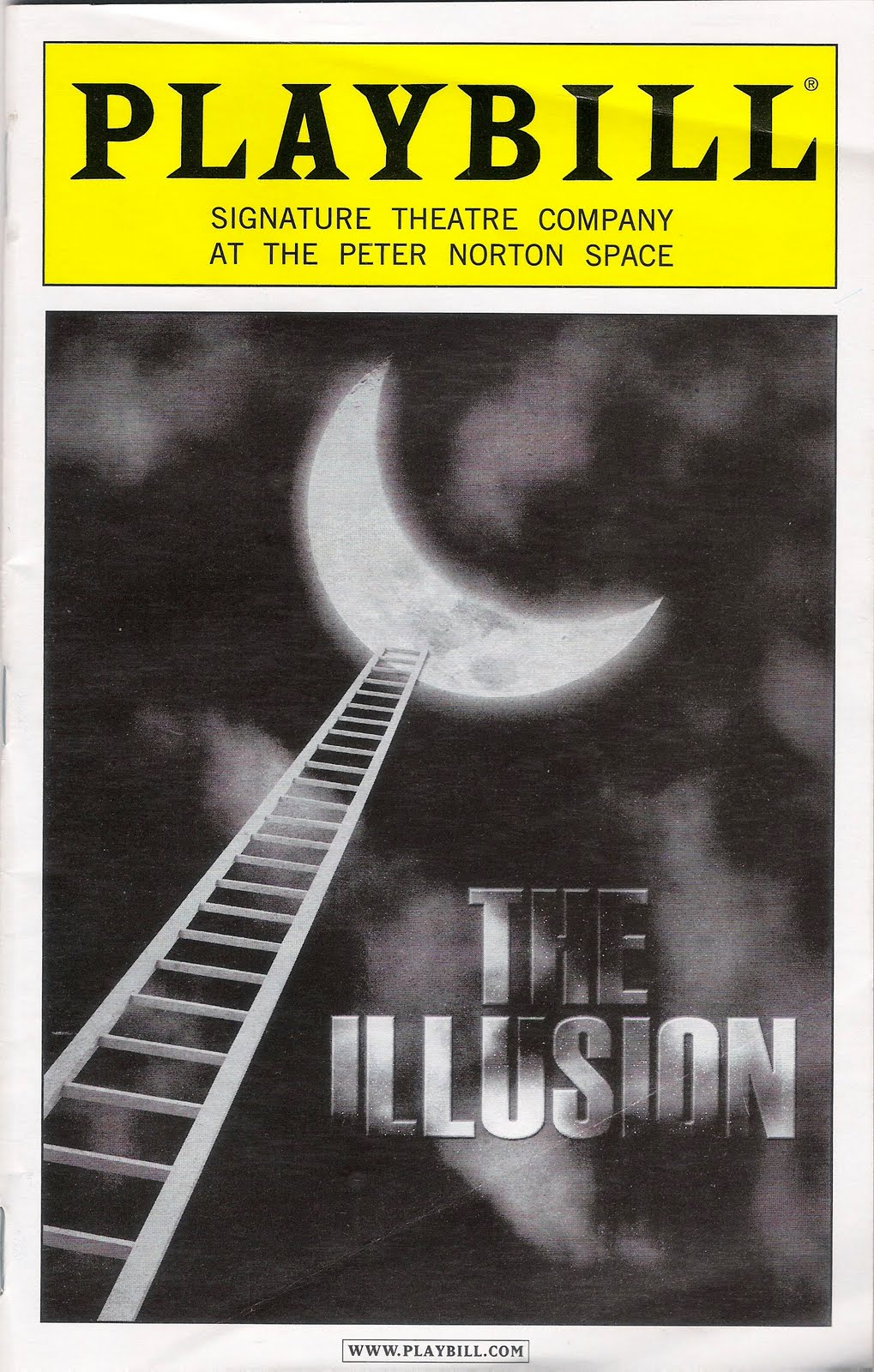
The Illusion (1988, Tony Kushner), seen at the Peter Norton Space in New York
Tony Kushner's adaptation of Pierre Corneille's 1636 play L'Illusion Comique is the closing selection of the Signature Theatre Company's current Kushner-centered season, one which included a gripping revival of the playwright's majestic Angels in America. This one—conceived while Kushner was writing the first part of Angels—is no less magnificent. It is a fascinating and brilliantly written piece of meta-theater, one that uses its post-modernist conceit to not only meditate on the, well, illuminating power of the medium, but to also consider the subject of love itself as possibly wholly driven by illusions. It's involving and entertaining enough that it doesn't feel as much of academic exercise as that might sound. It all builds to a final metaphysical twist that in lesser hands might have felt like cheating (see the last page of Ian McEwan's Atonement for a similar gambit pulled off problematically), but which, in this context, is carefully prepared for, genuinely thought-provoking and, in its own way, hilariously funny. Oh, how much we sometimes take actors for granted, yet how much truths their art can contain! 

Art

Primitive (2009, Apichatpong Weerasethakul), seen at the New Museum in New York
There was a hint of historical and political commentary in the Thai director's recent film Uncle Boonmee Who Can Recall Past Lives; this installation—currently up on the third floor of the New Museum—draws out those threads to encompass eight videos and two paintings. But Apichatpong doesn't have a polemical bone in his body. Instead, you walk into this multi-part work and immediately feel transported back into the jungle of Uncle Boonmee—an immersive environment full of memories that are by turns whimsical and agonizingly real, joyous and tension-filled. I'm still wondering if Primitive as a whole is maybe a bit too opaque about its supposed sociopolitical/historical intentions; nevertheless, this is still something to experience and ponder.

Wednesday, June 15, 2011

On Character Motivations in Movies

BROOKLYN, N.Y.—The line between opaque character motivations and merely underimagined characters can be a fine one indeed.

Sometimes in a drama, you might come across an action that a given character undertakes that strikes you as either inconsistent with that character's previous behavior, or simply unclear as to his/her motivation behind said action. Do you immediately chalk up such confusion on the viewer's part to bad screenwriting—a possible failure on the screenwriter's part to fully imagine these characters? Or are you, like me, more often than not inclined to give that particular screenplay the benefit of the doubt?

I've been thinking about this issue a bit more than usual recently, inspired by two films I've seen: Béla Tarr's Sátántangó (1994) and Radu Muntean's Tuesday, After Christmas (2010). As far as subject matter goes, these two films are worlds apart; stylistically, however, they are startlingly similar, with both directors committed to extremely long takes and a starkly realistic (if not downright depressive, at least in Tarr's case) atmosphere in dissecting the physical and emotional environments they inhabit. In aiming for this fly-on-the-wall approach, however, they also both end up taking a more detached perspective on the human behavior they portray, not always bothering to make clear the motivations behind the behavior.


One of the most infamous sequences in Sátántangó involves a young girl (Erika Bók) who, finding herself bored while waiting around for her brother, hides in an empty space away from the rain, picks up a pet cat and proceeds to torture and eventually kill it. (This turns out, believe it or not, to be not the worst thing she does in her section of the film.) Why does she commit this appalling act, which Tarr, of course, shoots in unnervingly prolonged takes without any cutaways to spare us the worst? Is it just an indication of how bored she is? Does she truly believe she's just playing around with it? Is she that determined to exercise her power over something—a power that she perhaps is otherwise unable to exercise in her regular life? Or is her attitude toward this poor creature a product of the loveless environment in which she lives: an isolated, failed farm collective in Hungary in which most of the inhabitants exhibit variations of boredom, selfishness and general spiritual bankruptcy? Tarr doesn't bother to give us any clear indications of the reasons behind her actions; he—with the invaluable assistance of cinematographer Gábor Medvigy—simply looks on impassively.


Or take the pivotal moment in Tuesday, After Christmas when Paul (Mimi Branescu) finally decides, a couple days before Christmas, to fess up to his wife Adriana (Mirela Oprisor) about the affair he's been carrying on with their daughter's dentist, Raluca (Maria Popistasu). Following in Tarr's footsteps, Muntean shoots both the build-up to this bombshell moment and the resulting emotional fall-out in one single take; just as there is now nowhere for Paul to hide from Adriana's knife-edged glare, Muntean and cinematographer Tudor Lucaciu don't give us the relief of edits or changes in camera angles to shortchange the emotional brutality of the moment. And yet, there may still be lingering questions regarding that moment in your mind: Why does he choose that day, of all days, to let out his secret? What makes him decide to let that secret out in the first place? (He never vocalizes his thoughts, and Muntean never lets us in on them through any sort of voiceover.) Other than that one tension-filled scene at the dentist's office—in which, by happenstance, his wife and his mistress find themselves in the same room, his wife knowing nothing about his relationship with Raluca in the moment—he seems to have his double life under reasonable control. It almost comes off as an implicit bit of self-awareness on Muntean's part that, throughout Adriana's meltdown in that scene, the one question she never bothers to ask her philandering husband is "Why?"

Why, indeed. Neither director seems all that interested in providing explanations for behavior so much as just showing us that behavior and leaving it to audience members to come up with his/her own explanations, based on the evidence presented onscreen. Some might find this a frustrating approach and conclude that a screenplay simply hasn't been fully imagined enough by all parties involved. But is it quite that simple?


A lot of the mainstream films and television dramas I've seen over the years seem to have a marked preference for tidy explanations for the ways characters behave; legal dramas and police procedurals like the many Law and Order and CSI series, especially, probably wouldn't be so popular if they didn't satisfy an audience's desire for closure, psychological or otherwise, in their mysteries. But are motivations ever that easy to parse in real life? Even after New York Representative Anthony Weiner finally admitted that he sent those explicit photos to other women through Twitter that accidentally found their way into the public eye, people are still discussing the whys of this situation, such as: Why do people in positions of power like Weiner—or like Bill Clinton as president of the United States in the 1990s—feel this compulsion to risk wrecking their reputations and home lives? There may be lots of speculation among "experts" in the media, but usually that's all they amount to: lots of speculation, rarely a consensus explanation.

Of course, the Anthony Weiner story (which seems to get both more catastrophic and less interesting as it wears on) is a real-life event; Sátántangó and Tuesday, After Christmas are wholly fictional constructs—both imbued with the patina of cold, hard reality, but fictional nevertheless. It's probably natural for all of us to approach works of fiction with different expectations than we do works of non-fiction.

I guess, as is often the case with a complex issue like this, one's stance on this matter will depend on a given film. For the most part, I'm willing to go along with the elliptical characterizations in Sátántangó and Tuesday, After Christmas because I do feel that each filmmaker sketches in just enough detail, whether character-based, plot-based or environment-based, for us to solidly draw our own conclusions as to, say, why the girl tortures the cat, or why Paul cheats on his wife for the younger female dentist.


Sometimes, though...well, I suppose my ability to suspend disbelief can go only so far in some cases. For instance, personally (and I seem to be in a minority on this), I've always had trouble reconciling the decision Maggie, the boxer played by Hilary Swank in Clint Eastwood's Million Dollar Baby (2004), makes by asking her beloved mentor Frankie (Eastwood) to let her die after an accident during a crucial match leaves her paralyzed. This woman, full of life and pluck, so driven that she's willing to cast off her extravagantly ungrateful family to realize her dreams, suddenly decides she would rather give up on life than do what we've seen her do throughout the rest of the film: fight to live like she fought to become a boxing champion? Yes yes, I know what screenwriter Paul Haggis has her say in the film to justify this twist: that she feels she has accomplished all that she has set out to do in this world, and would prefer to depart on top, now that she's physically unable to box anymore. Nevertheless, for me anyway, the decision doesn't jibe with the way the character's been written and acted up to that point—and if you don't buy Maggie's decision, then that finale can't have the same devastating emotional impact that Eastwood and Haggis surely intend, however much one is willing to accept that decision at face value. (But then, I've always found Maggie to be a rather thinly written role, however beautifully performed by Swank. I don't really buy her motivation because I don't really buy her as a fully fleshed-out character; to me, she's a mere archetypal vehicle to justify Frankie's own casting off of his emotional demons throughout the film.)

Of course, should such matters of character motivations make a big difference in the long run? Often, one will hear people poke such psychological holes at, say, your standard Hollywood action extravaganza, but such niggles will usually be dismissed with, "If he/she didn't act this way, there wouldn't be a movie." Are dramas somehow more worthy of such scrutiny? Should we necessarily hold a drama such as Million Dollar Baby to a different standard of dramatic logic?


Jean Renoir famously played a character in his own film The Rules of the Game (1939) that uttered, "The awful thing about life is this: Everybody has his reasons." Some of cinema's greatest artists—Renoir himself, Robert Altman, Eric Rohmer (whose marvelous 1986 film Le Rayon Vert I've just seen, by the way, and which I hope to write about at length eventually), Yasujiro Ozu, among other examples—have used that dictum not as an excuse to try to connect the psychological dots, so to speak, but to, in their own distinct ways, present characters' behavior and the circumstances surrounding their actions, and trust us to be able to intuit the motivations driving that behavior.

When it comes to the mysteries of human nature, maybe ultimately the most honest approach for an artist is to merely stand back and observe people in all their messy complexities. Whether it all adds up depends on the individual viewer, I suppose. But to try to explain it all would risk reducing our multifaceted human species into a series of easy-to-package psychological profiles. The best art ought to aspire to something more than that.